Introduction
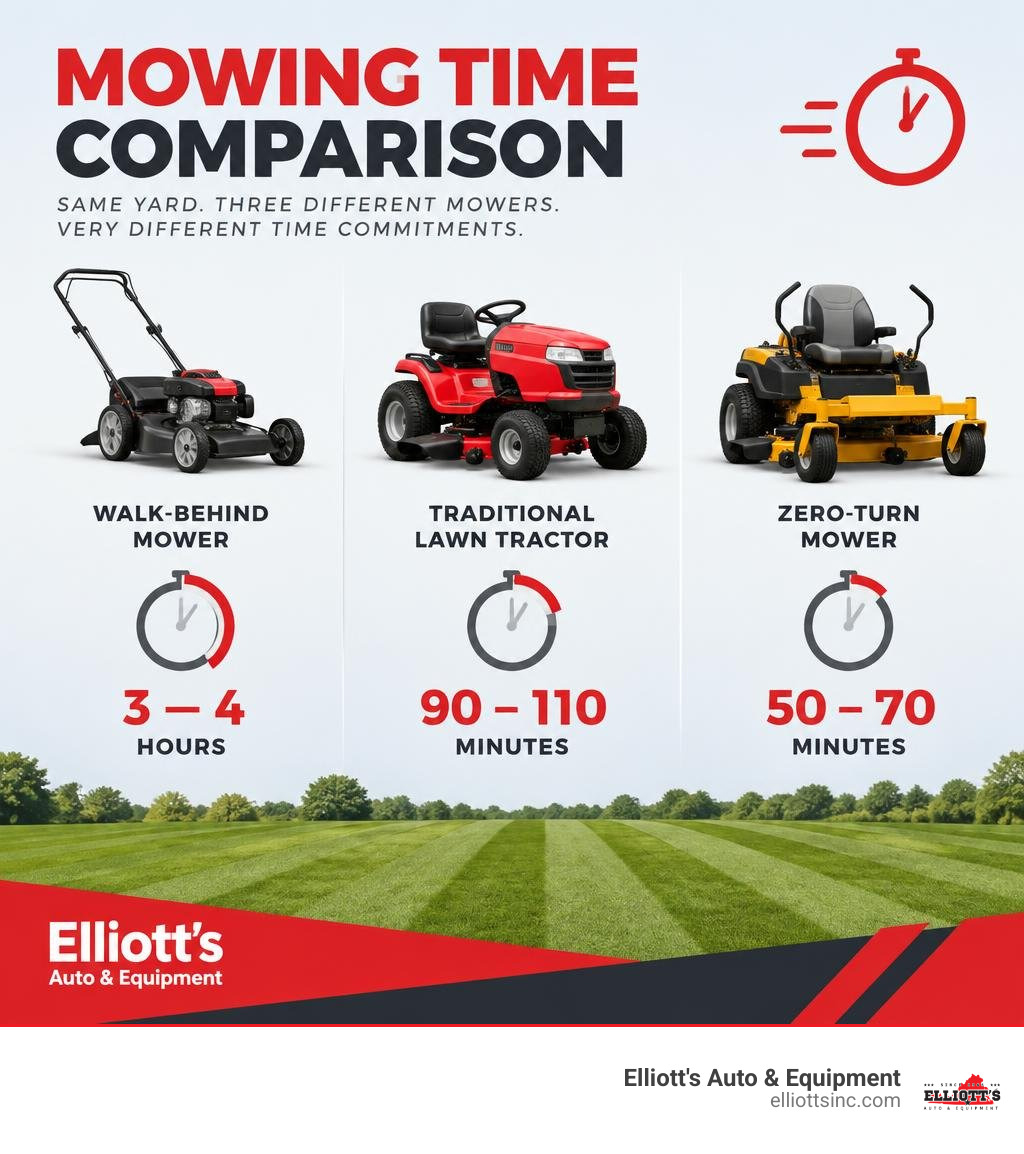
For most homeowners managing 1 to 3 acres, the best zero turn mower is a residential model with a 52- to 54-inch fabricated cutting deck, a commercial-grade V-twin engine, and serviceable hydrostatic transaxles. For properties larger than 3 acres or commercial routes, the best choice is a heavy-duty commercial zero turn with a 60- to 72-inch fabricated deck and high-capacity hydraulic drive systems. When you look across a wide expanse of open turf, the time you spend maintaining it matters just as much as the final appearance. Upgrading to a zero turn mower (ZTR) provides unmatched steering agility through independent rear-wheel drive systems, allowing you to pivot 180 degrees at the end of every pass without slowing down. On a 2-acre lawn, a quality residential zero turn finishes cutting in 50 to 70 minutes. By contrast, a standard 22 HP traditional lawn tractor requires 90 to 110 minutes, and a 21-inch self-propelled walk-behind mower demands 3 to 4 hours of strenuous labor.
Investing in the right equipment saves hours of work each weekend. To make an informed decision, you must evaluate how frame engineering, deck size, and powertrain construction align with your yard’s specific layout.
Residential vs. Commercial: What Is the Best Zero Turn Mower for Your Yard Size?
Understanding the distinction between residential and commercial machinery is essential before purchasing equipment for your land. While both categories utilize lap-bar steering to control dual hydraulic transmissions, their structural durability and continuous-duty ratings differ significantly.
Residential zero turn mowers are engineered for property owners mowing once or twice a week during growing season, typically racking up 50 to 100 operating hours annually. These units feature lightweight stamped or medium-gauge fabricated steel cutting decks, standard tubular frames, and sealed hydrostatic transaxles designed for gentle to moderate terrain.
Commercial zero turn mowers, on the other hand, are built for daily operation in demanding conditions. They utilize heavy structural steel channel frames, high-volume hydraulic pumps with separate wheel motors or heavy-duty serviceable transaxles, and thick fabricated steel decks reinforced to deflect strikes from hidden tree roots, rocks, and uneven ground. Homeowners seeking in-depth analysis can explore our ultimate guide to zero turn mowers to evaluate mechanical components across various frame categories.
| Specification Feature | Residential Zero Turn | Commercial Zero Turn |
|---|---|---|
| Typical Cutting Deck Sizes | 34″ to 54″ | 52″ to 72″+ |
| Deck Construction | Stamped or 10–12 gauge fabricated steel | Heavy-duty 7-gauge fabricated steel |
| Hydrostatic Transaxles | Sealed units (e.g., Hydro-Gear EZT, ZT-2200) | Serviceable units (e.g., Hydro-Gear ZT-3100, ZT-4400, or separate pumps/wheel motors) |
| Mowing Ground Speed | 6 to 8 mph | 10 to 12+ mph |
| Annual Operating Design | 50 to 100 hours per year | 500 to 1,000+ hours per year |
| Seating & Ergonomics | High-back padded seat with basic springs | Full mechanical or air-suspension seats with vibration isolation |
| Fuel Capacity | 3 to 5 gallons | 10 to 12+ gallons |
What Is the Best Zero Turn Mower for Residential Properties Under 3 Acres?
For homeowners managing 1 to 3 acres, the priority is finding a balance between cutting efficiency, maneuverability, and component longevity. A residential machine equipped with a 52-inch or 54-inch fabricated deck delivers an optimal sweep path while fitting easily between common landscaping obstacles.
Units equipped with professional-grade V-twin engines (such as 23 HP Kawasaki FR series engines) and Hydro-Gear ZT-2800 or ZT-3100 serviceable transaxles provide the performance necessary to handle thick southern turf. For instance, high-end residential setups cutting at 7 mph can comfortably complete a 2-acre lawn in roughly 50 minutes. As highlighted in seasonal buying guides like the Best Zero Turn Mower 2026 – Residential 1-3 Acres, welded steel decks resist warping, maintaining level blade alignment over years of regular use. Heavy-gauge fabricated cutting decks consistently deliver cleaner cuts and superior grass dispersal compared to thin, stamped metal alternatives.
What Is the Best Zero Turn Mower for Commercial Landscaping and Large Acreage?
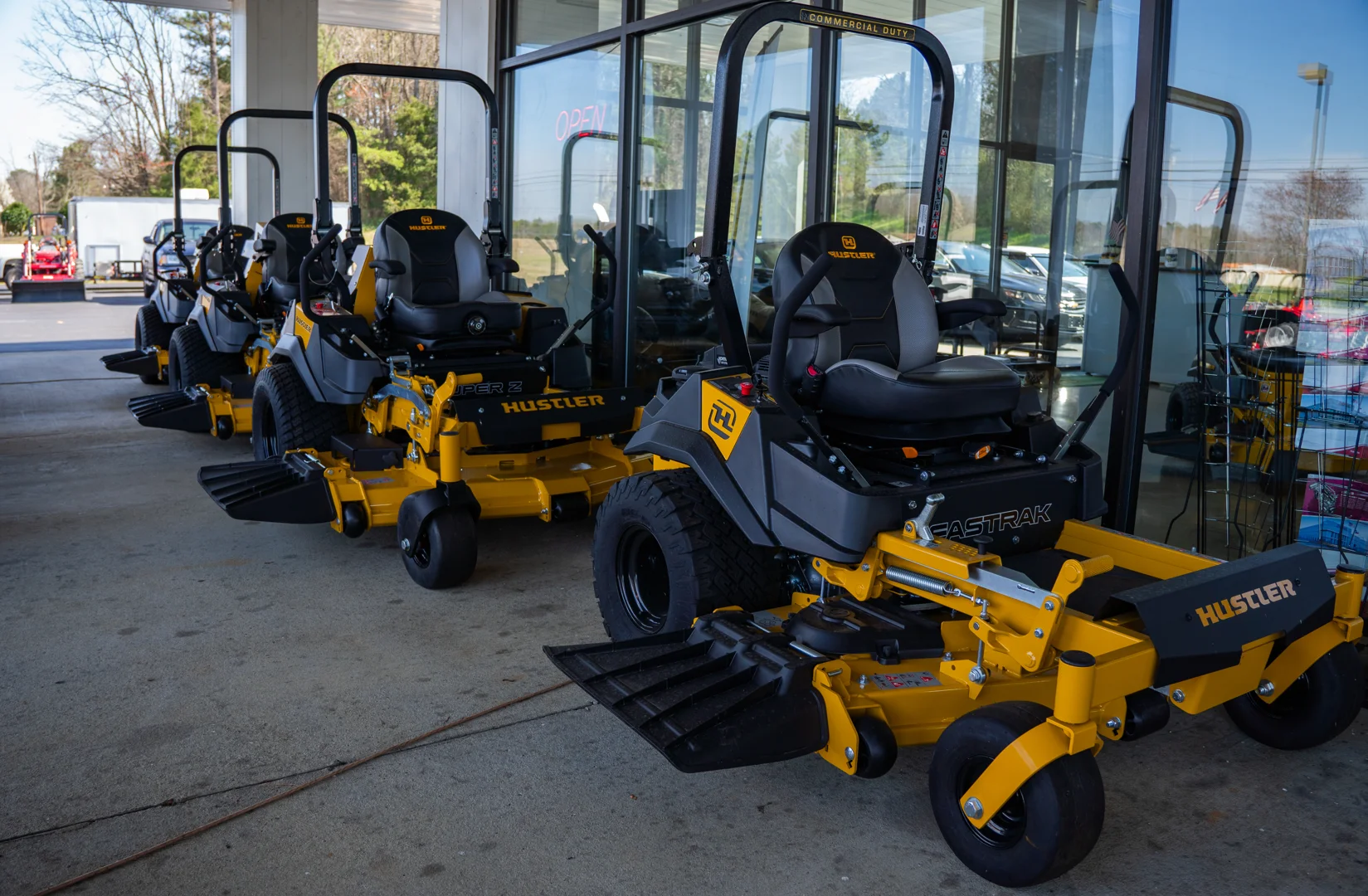
When maintaining properties larger than 3 acres, or managing multi-property commercial routes, standard residential drive systems experience premature wear. Large acreage demands robust commercial equipment designed to run continuously at higher speeds without overheating the hydraulic fluid.
Commercial-grade machines, such as the Hustler commercial zero-turn lineup, incorporate heavy-duty engine packages (from 30 to nearly 40 HP) featuring advanced engine protection systems. Vanguard Oil Guard systems, for example, reduce operating oil temperatures by 20 to 30 degrees and extend oil change intervals up to 500 hours, keeping equipment working in the field longer.
Cutting decks on top commercial machines are built from commercial 7-gauge welded steel. At ground speeds reaching 11.5 mph, a 60-inch deck mows up to 5.56 acres per hour, while an expansive 72-inch deck clears 6.68 acres per hour. Furthermore, integrated features such as tool-free deck rake adjustments let operators tailor deck pitch directly from the seat to manage changing turf densities throughout the day.
Gas vs. Electric Zero Turn Mowers: Performance, Runtime, and Value
The zero turn market includes both traditional gas-powered machines and high-voltage battery-electric options. Evaluating your acreage and property layout helps determine which platform provides the best return on investment. Homeowners deciding on a platform can read our breakdown on zero turn vs traditional lawn mowers to see how modern drivetrains compare against older yard tractor platforms.

Gas-powered zero turns remain the industry benchmark for large acreage. High-displacement engines provide uninterrupted cutting power: when fuel runs low, you can refill the tank in two minutes and immediately resume mowing.
Electric zero turn mowers utilize lithium-ion battery packs to power electric drive and blade motors. Standard 42-inch electric models can cut up to 2 acres per charge, while larger 52-inch battery configurations handle up to 3 acres per charge under ideal conditions. Entry-level electric zero turns offer alternative battery options at lower price points for small, simple lawns.
Electric mowers operate at roughly 70 to 78 dB—comparable to a domestic vacuum cleaner—allowing for quiet operation that will not disturb neighbors. Gas zero turns run at 90 to 100+ dB, requiring hearing protection. However, electric mowers command a 30% to 50% price premium over comparable gas models, and cutting dense, wet, or overgrown grass reduces battery runtime per charge.
Battery Maintenance and Winter Storage Considerations
Both gas and electric zero turn platforms require proper seasonal maintenance to prevent downtime:
- Electric Mower Battery Care: Store lithium-ion batteries in a climate-controlled space between 32°F and 80°F during the winter. Avoid leaving batteries on an unheated charger in freezing conditions, and maintain a 30% to 80% charge level during extended storage to protect battery cell capacity.
- Gas Engine Fuel Care: Treat gasoline with fuel stabilizer before winter storage, or run the carburetor dry to prevent ethanol-blend fuel from gumming fuel passages and degrading rubber fuel lines.
- Hydraulic System Care: Inspect hydrostatic transaxles for leaks. If your mower features serviceable transaxles (such as Hydro-Gear ZT-2800, ZT-3100, or commercial integrated pumps), replace hydraulic oil and spin-on filters at the manufacturer’s recommended 200- to 400-hour intervals.
- Cutting Spindle Maintenance: Clean out packed grass clippings from beneath the deck after every use to prevent deck rust and bearing corrosion. Grease deck spindle zerks and idler arm pivot bearings annually.
Key Buying Factors: Deck Width, Transaxles, Slopes, and Gate Clearance
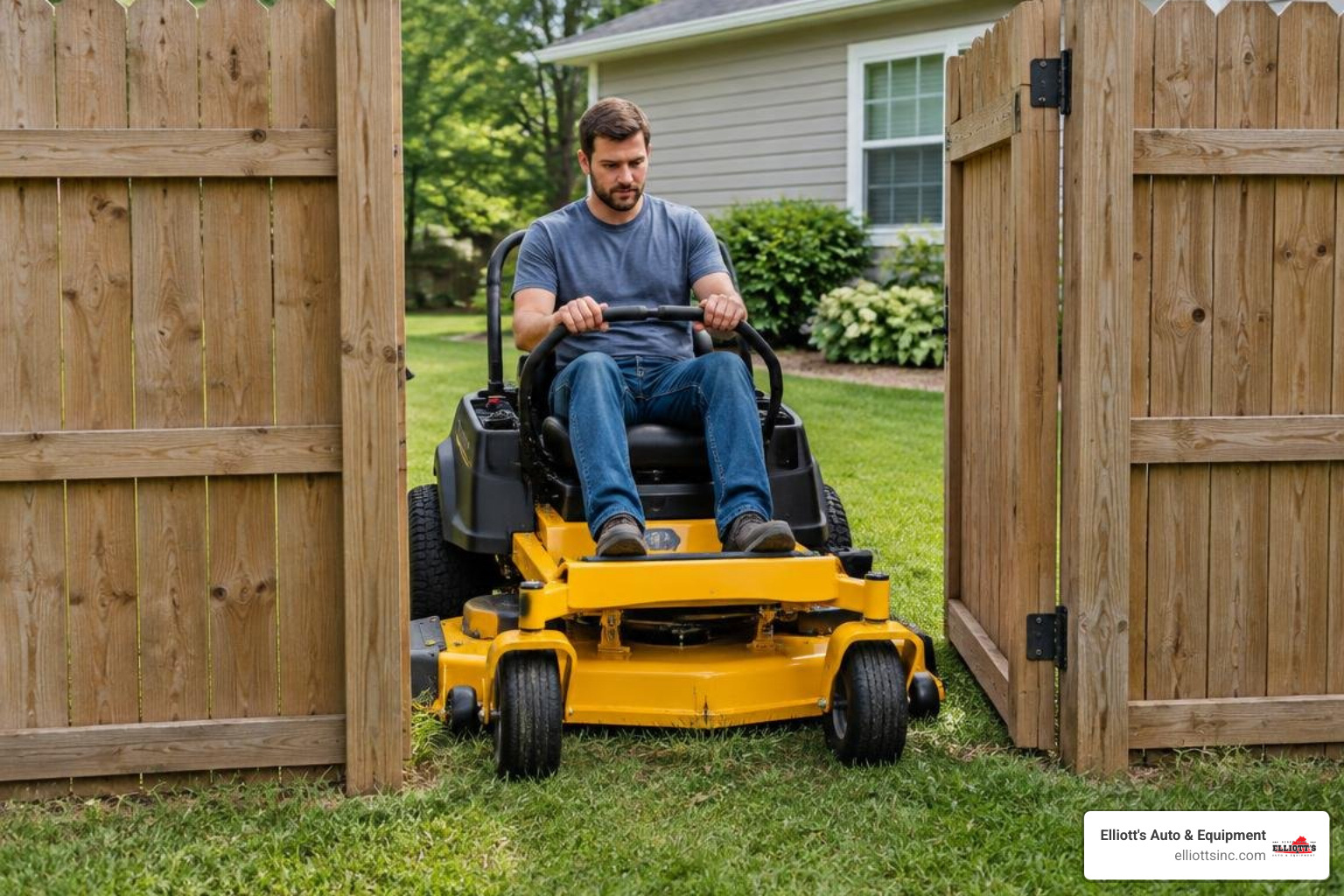
Selecting the ideal machine requires reviewing property constraints before matching mower dimensions to your layout. Our guide on how to choose the right zero turn mower explains how to balance cutting width with practical yard dimensions.
Gate Clearance Constraints
A common equipment delivery issue occurs when a mower’s cutting deck is wider than the property’s access gates. If your backyard is enclosed by a standard 48-inch fence gate, a 52-inch or 54-inch mower will not pass through. Even a 48-inch deck will not clear a 48-inch gate opening once you account for the side discharge chute and deck brackets. For yards with tight 36-inch or 48-inch gates, select a compact 34-inch to 42-inch deck, or consider widening your fence gate to accommodate a 52-inch machine.
Operating on Slopes and Hills
Standard residential zero turn mowers use unpowered front caster wheels that pivot freely. Directional steering relies on the traction of the rear drive tires. On slopes steeper than 15 degrees (a 27% grade), standard residential zero turns can lose rear tire grip, causing the front casters to swing downhill and reducing steering control.
When mowing rolling terrain, choose a mower built with a low center of gravity, wider drive tires, and heavy-duty transaxles that provide superior wheel-holding torque. For mid-sized acreage that features rolling hills, learning why the Fastrak Z mower might be your lawn’s new best friend shows how heavy commercial frames improve hillside stability.
Frequently Asked Questions About Zero Turn Mowers
How long does a quality zero turn mower engine last?
A zero turn mower powered by a quality commercial-grade V-twin engine (such as a Kawasaki FR or FX series) offers a service life of 1,500 to 2,500 operating hours when properly maintained. For a homeowner mowing 70 to 100 hours per year, this translates to 15 to 25 years of reliable performance. To maximize engine life:
- Change engine oil and filters at scheduled 50- to 100-hour intervals
- Clean and replace the paper air filter element regularly
- Keep engine cooling fins clear of grass debris to avoid overheating
Can a commercial zero turn mower safely handle hills and steep slopes?
Commercial zero turns handle rolling hills more securely than entry-level residential units because their heavier steel frames, wide-track drive tires, and dual hydraulic pumps distribute weight closer to the ground. However, you should not operate any zero turn mower on slopes exceeding 15 degrees.
Avoid making sudden pivots or sudden stops when operating on inclines. Operators unfamiliar with dual-lever steering dynamics can review our guide on how to drive a zero turn mower to master smooth directional control on sloped terrain.
Is a commercial zero turn mower worth the extra cost for a homeowner?
For homeowners managing 2 to 3 acres with flat, uniform turf, a residential zero turn with a fabricated deck offers plenty of performance and value. However, paying the premium for a commercial or heavy-duty semi-commercial machine is justified if:
- Your property features rough, uneven ground, exposed roots, or persistent brush that would dent a light stamped deck
- You want higher forward mowing speeds (10+ mph) to cut weekly mowing time in half
- You prioritize the ride comfort of a full suspension seat during long mowing sessions
- You want commercial hydrostatic drive systems that can be serviced and rebuilt for decades of use
Conclusion
Choosing the right zero turn mower comes down to matching your property’s acreage, gate access, and terrain profile with a durable frame, engine, and transmission package. A quality fabricated cutting deck, paired with serviceable hydraulics and a reliable powerplant, turns weekend lawn maintenance into a quick and comfortable task.
At Elliott’s Auto & Equipment, we serve property owners throughout South Boston, Virginia, by offering a complete lineup of new Hustler residential and commercial zero turn mowers. Our team provides in-house sales, flexible financing, genuine replacement parts, and factory-trained maintenance support to keep your lawn equipment performing season after season.
Stop by our showroom or visit us online to consult with our equipment specialists and determine what is the best zero turn mower for your property.