How to Find Tractor Parts That Fit
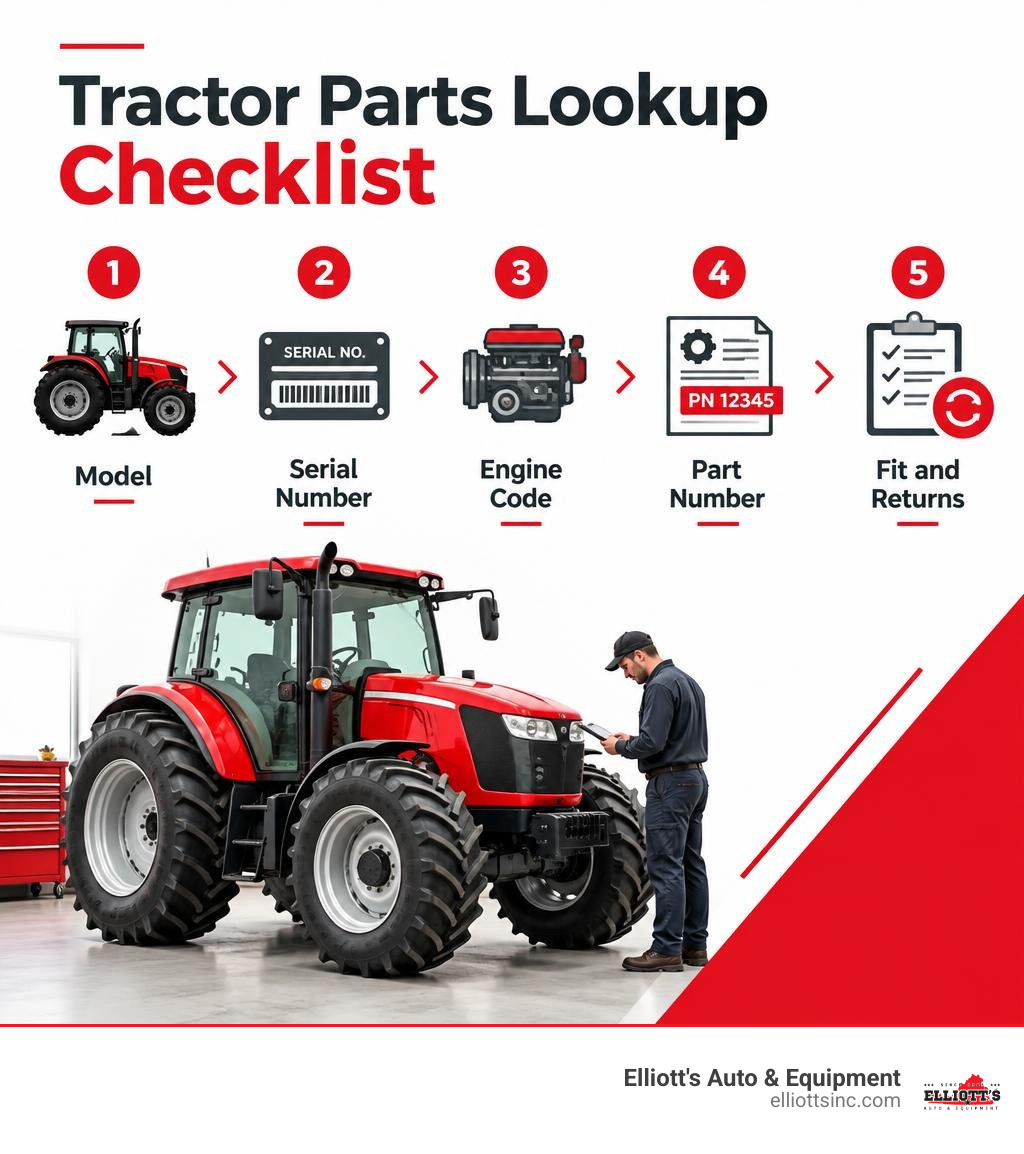
Start with the tractor’s model and serial number, then check its engine code. Use those details to find the part number in a parts catalog. Before ordering, confirm the part’s fit, what comes in the package, and the seller’s return policy. A model name alone may not be enough: tractors in the same series can use different engine, clutch, or steering parts.
At Elliott’s Auto & Equipment, we began by servicing local vehicles and equipment in South Boston, Virginia. That experience shapes our practical approach to finding tractor parts and keeping equipment working.
Whether you run a homestead utility rig or manage commercial acreage, unexpected equipment downtime costs real time and money. Knowing how parts fit together across various systems makes finding the right component fast and straightforward. For a broader view of how dealerships support this process, see how tractor dealerships can simplify equipment maintenance.
Sourcing Essential Tractor Parts Across Key Systems
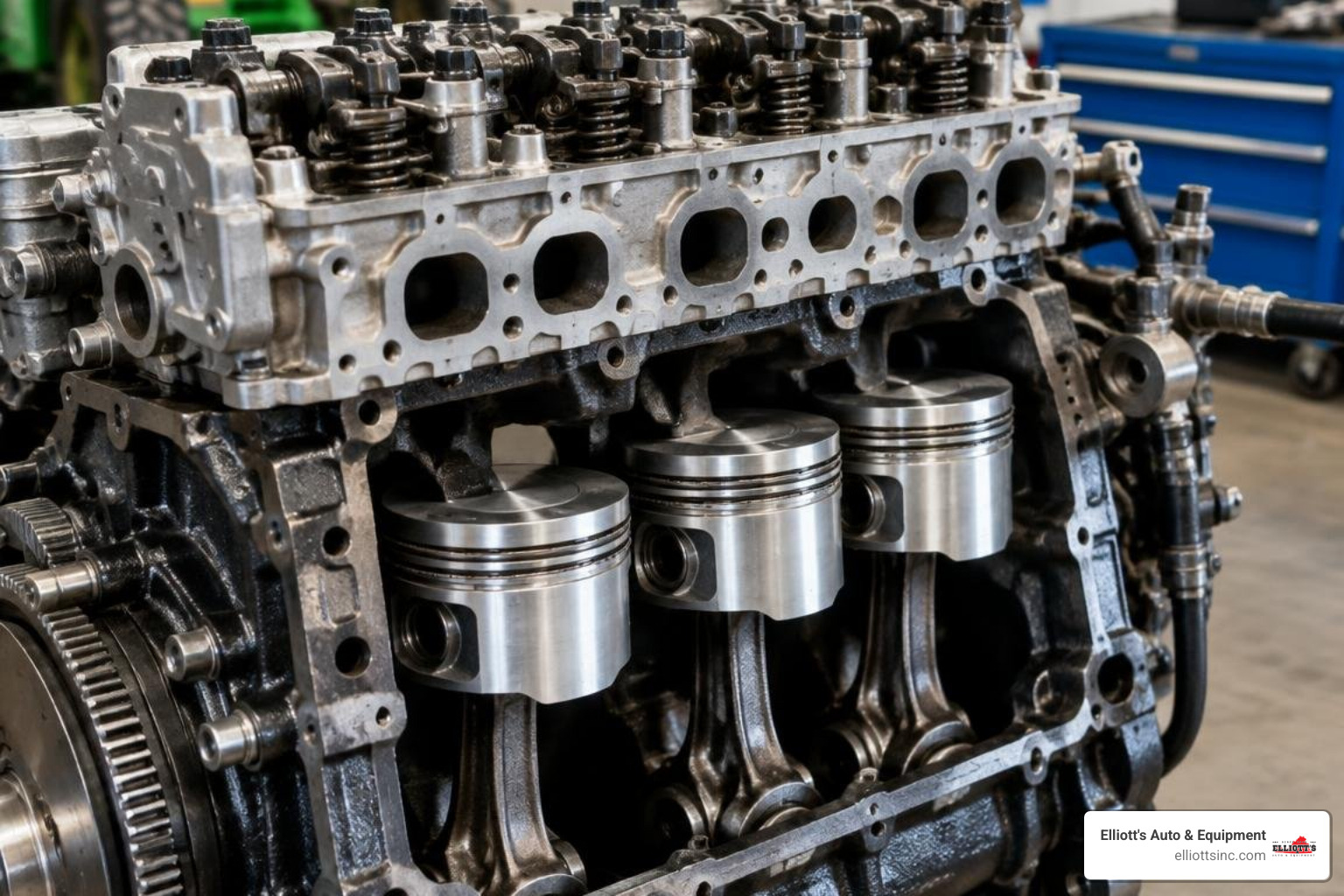
Modern and vintage tractors combine mechanical, hydraulic, and electrical subsystems designed to handle heavy daily workloads. When one component wears out, it often places extra strain on connected assemblies. Understanding how individual subsystems operate makes it easier to spot wear early and find the exact replacement items you need.
Working with experienced professionals can save hours of troubleshooting, and learning how tractor dealerships simplify equipment maintenance helps you build a practical service plan before critical failures occur.
Critical Engine and Transmission Tractor Parts
The engine and drivetrain form the core of your machine’s working capability. Over hundreds of operational hours, internal combustion friction naturally wears down rings, bearings, and valvetrain components.
- Engine Overhaul Kits: A complete rebuild kit typically includes pistons, compression rings, cylinder sleeves, thrust washers, and a full gasket set. Comprehensive kits can contain up to 12 distinct component groups, restoring cylinder compression and power.
- Cylinder Heads and Crankshafts: Severe overheating or lubrication failure can warp cylinder heads or score crank journals. Sourcing matched crankshafts and precision-machined heads ensures proper compression balance and oil pressure.
- Clutch Discs and Pressure Plates: Tractor clutches handle high torque loads during ground engagement. Dual-stage clutches, pressure plates, release bearings, and pilot bushings must match your flywheel depth precisely.
- Transmission and Reverse Gears: Heavy shifting and direction changes wear synchros, shift forks, and gear teeth. High-stress gears require heat-treated alloys that match the original gear pitch.
When planning major internal repairs, cross-referencing listings in a comprehensive agricultural parts catalog helps you check component groupings across engine and transmission categories.
Steering, Hydraulics, and PTO Components
Your tractor’s utility depends on reliable hydraulic power, responsive steering, and a steady power take-off (PTO).
- Power Steering Cylinders and Tie Rod Ends: Heavy front-end loader work puts significant pressure on steering linkages. Replacing worn tie rod ends and leaking hydraulic assist cylinders eliminates steering slop and uneven front tire wear.
- Hydraulic Pumps and Lift Top Assemblies: The primary hydraulic pump powers your three-point hitch, steering, and remote outlets. Worn gears or internal seals reduce flow rate, leading to slow cycle times or hitch shudder under load.
- PTO Shafts and Clutches: The PTO delivers direct mechanical energy to mowers, tillers, and balers. Internal PTO clutches, brake bands, and output splines wear over seasons of continuous engagement.
- Remote Valves and Couplers: Leaking quick-disconnect couplers introduce air into hydraulic circuits and drop fluid levels, requiring fresh O-rings or complete valve block rebuilds.
How to Identify the Correct Replacement Components for Your Model
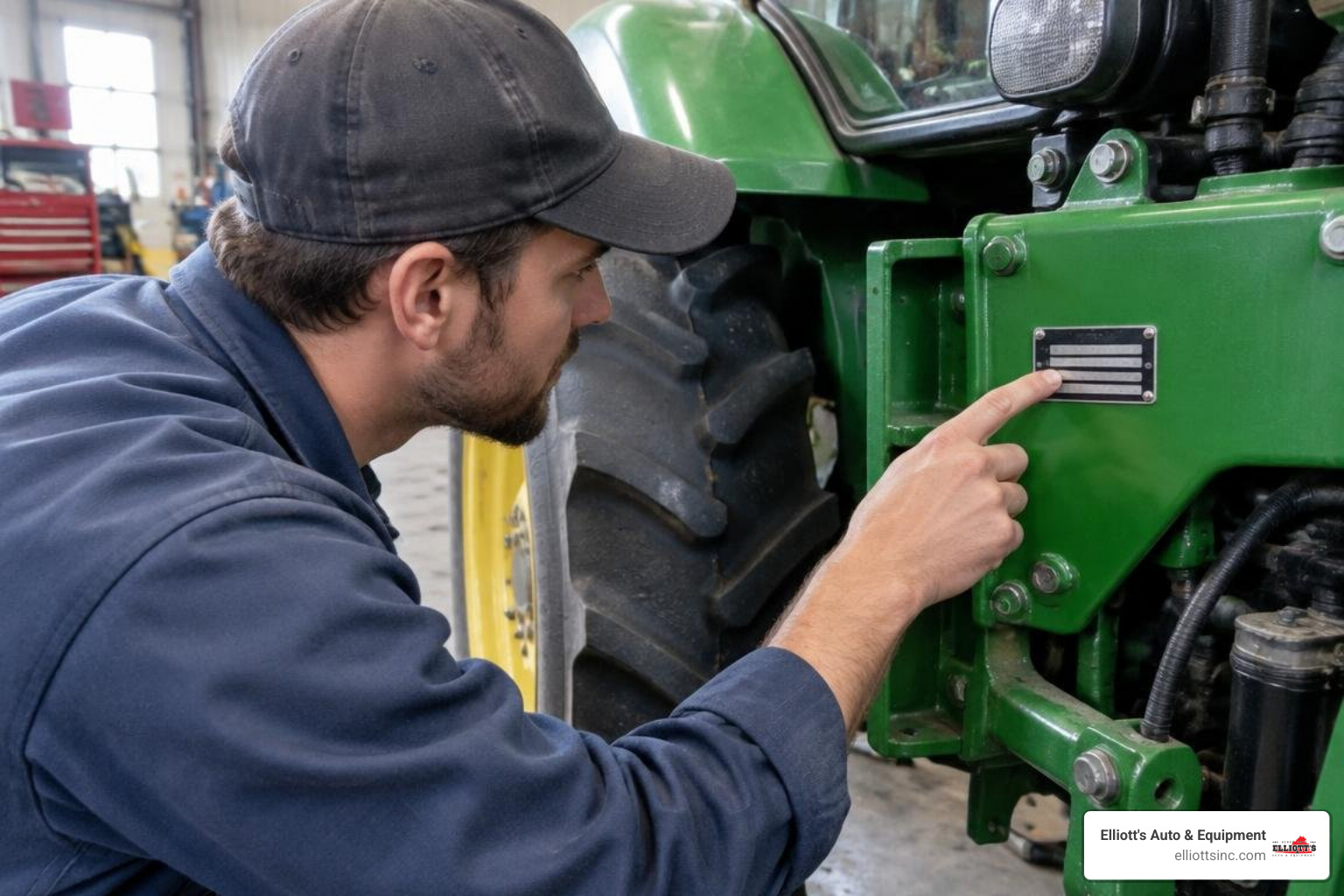
Tractors frequently undergo engineering revisions during a single production run. Two machines with the same badge on the hood might use different fuel injection systems, hydraulic pumps, or starter motors depending on their build date.
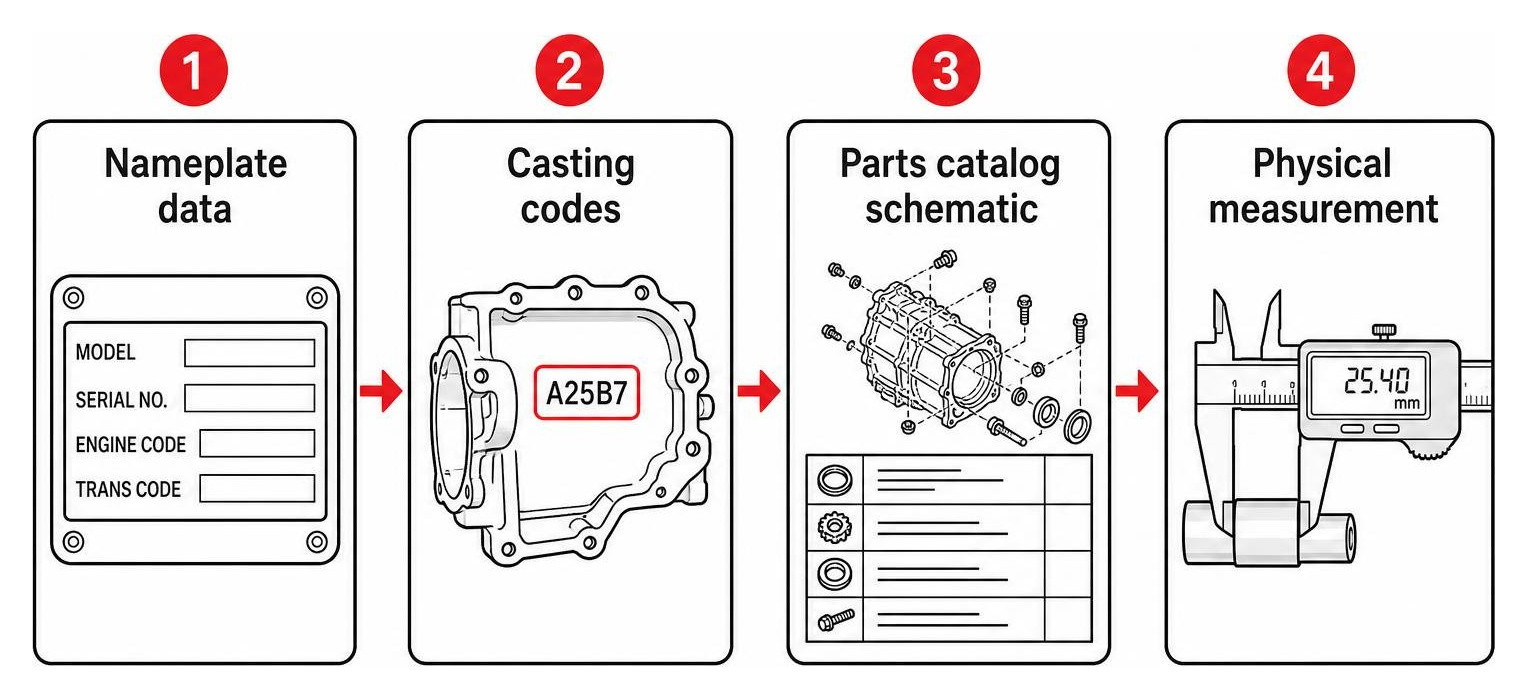
Decoding Serial Numbers, Engine Codes, and Specifications
Never rely on the model number alone. To verify compatibility before placing an order:
- Locate the Chassis Serial Plate: Usually stamped on the transmission housing, front axle support, or instrument panel frame.
- Find the Engine Stamping: Engine blocks feature raised casting marks and a stamped numerical sequence that identifies the specific engine build.
- Check Fuel and Seal Configurations: Many classic engines feature distinct variants. For example, some engines use direct injection while others use indirect pre-combustion chambers. Similarly, rear main crankshaft seals often vary between traditional rope seals and modern molded rubber lip seals.
- Confirm Bearing Tolerances: Engine overhaul kits often require you to specify main and rod bearing sizes separately, as your crankshaft journals may need standard, 0.010-inch undersize, or 0.020-inch undersize bearings after machining.
For legacy machines, specialized equipment parts catalogs illustrate how a single model line can feature multiple kit variations based on injection types and block revisions.
Sourcing Aftermarket vs. OEM Tractor Parts
Understanding the balance between Original Equipment Manufacturer (OEM) parts and aftermarket alternatives helps you manage repair budgets without compromising durability.
| Feature / Metric | OEM Components | Quality Aftermarket Components |
|---|---|---|
| Manufacturing Origin | Original equipment brand supplier | Third-party engineering manufacturers |
| Typical Cost Savings | Standard list pricing | 30% to 50% savings compared to OEM |
| Dimensional Fit | Exact factory match | Direct replacement matching factory specs |
| Fit Range Coverage | Specific to current branded models | Often engineered across multiple shared platforms |
| Warranty Terms | Standard dealer network warranty | Manufacturer-specific parts warranty |
Aftermarket components offer an economical way to keep mature machines running reliably. High-grade aftermarket suppliers manufacture parts to factory dimensional tolerances using equivalent metallurgy. OEM components remain the standard for warranty-backed, late-model repairs where absolute consistency is required.
Best Practices for Navigating Parts Catalogs and Online Inventories
Modern digital parts catalogs make finding replacement components straightforward once you understand how listings are structured. If you prefer professional diagnostic support, find local tractor service for Mahindra maintenance to confirm assembly numbers before ordering major mechanical assemblies.
Utilizing Digital Cross-Referencing Tools
When searching online inventories, use these cross-referencing techniques:
- Interchange Part Numbers: Many tractor brands share engine blocks, hydraulic pumps, and electrical systems. If an original part number is discontinued, search the manufacturer interchange number.
- Exploded Assembly Views: Use schematic diagrams to locate the specific sub-assembly—such as a differential lock fork or water pump impeller—ensuring you order all companion gaskets, O-rings, and retaining clips.
- Category Taxonomies: Major parts databases organize components into structured hierarchies (e.g., Drivetrain > Rear Axle > Differential Carrier). Browsing these categories helps you spot related wear items like axle seals and bearing cups that should be replaced during the same repair.
Independent suppliers and regional specialists maintain extensive listings organized by machine systems, making it easier to verify fitment across equipment lines.
Supplier Support, Shipping Logistics, and Warranty Verification
Before finalizing an order for heavy machinery components, evaluate the supplier’s ordering policies:
- Customer Support Channels: Dedicated suppliers provide responsive technical support via phone, email, and digital messaging. Confirming measurements with a parts specialist prevents return shipping hassles.
- Freight and Packaging: Heavy items such as complete engine blocks, loaded cylinder heads, and counterweights require secure palletized freight. Check whether your delivery address requires a liftgate service.
- Return Policies and Core Charges: High-wear assemblies like starters, alternators, and hydraulic remotes often carry a refundable core charge. Review the return window and packaging requirements for sending back rebuildable cores.
- Warranty Terms: Verify whether the warranty covers defective parts replacement only or includes limited labor allowances, especially on major internal drivetrain assemblies.
Preventive Maintenance to Extend Component Longevity
Proactive servicing reduces premature wear and keeps your equipment running smoothly season after season.
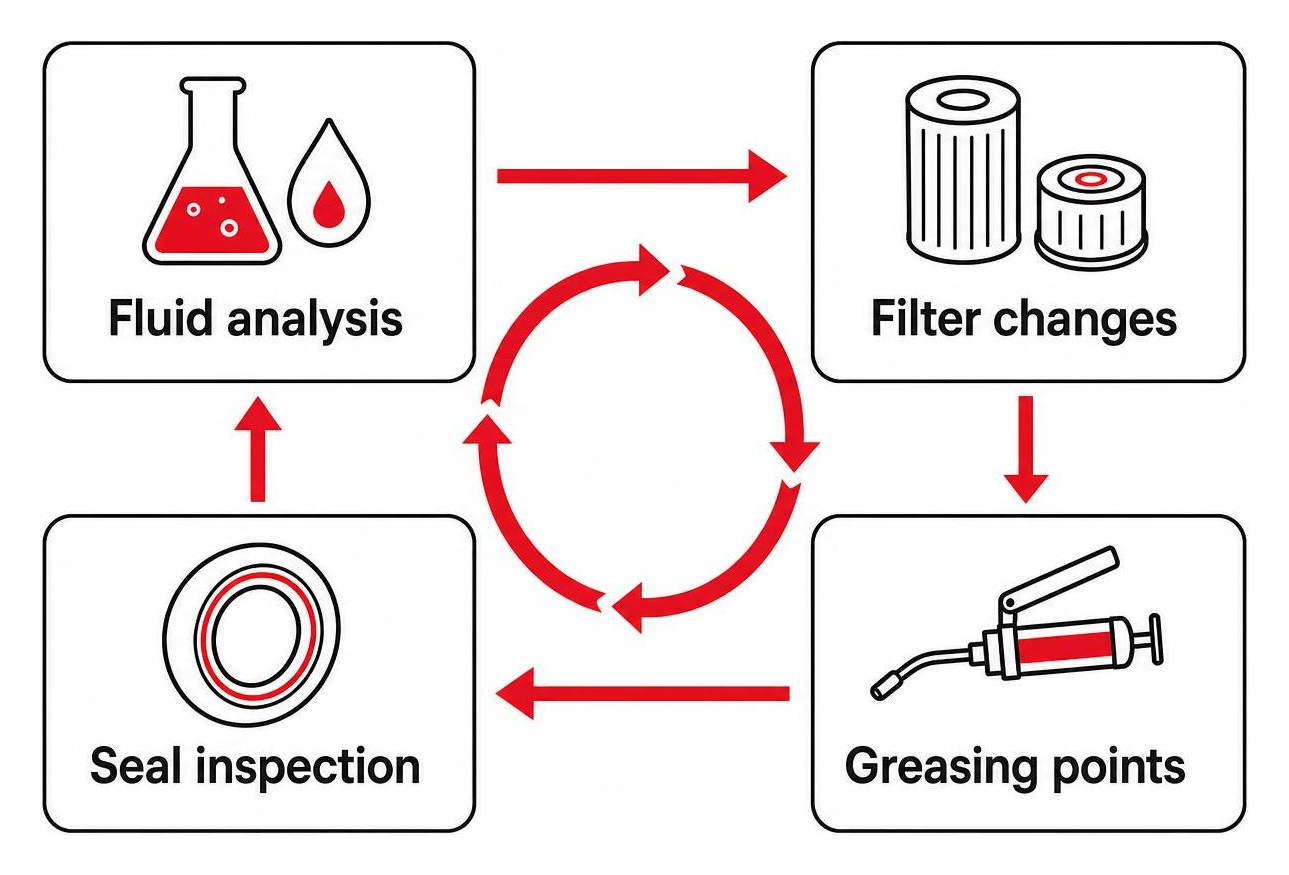
- Fluid and Filter Schedules: Engine oil, transmission-hydraulic fluid, and coolant degrade over time. Particulate contamination accelerates hydraulic pump gear wear and scores control valve spools. Replace filters at factory-recommended hour intervals.
- Daily Greasing Intervals: Front axle pivot pins, steering knuckles, loader linkages, and three-point hitch pivots require fresh grease to push out grit, moisture, and dirt.
- Air Intake and Filtration: Operating in dusty fields can clog primary air filters quickly. A compromised air filter allows fine particulate into cylinders, causing rapid piston ring and sleeve wear.
- Electrical System Upkeep: Clean battery terminals, verify alternator output, and inspect wire harnesses for rub spots to protect starter solenoids and safety switch relays.
- Seasonal Storage Preparations: If parking machinery for the winter, treat the fuel system, top off tanks to prevent condensation, and store batteries on trickle chargers in temperature-controlled spaces.
Establishing a relationship with an experienced dealership helps simplify parts sourcing and seasonal servicing. If you are reviewing your equipment strategy, take time to review how to choose the right tractor dealer for your land management needs to ensure you have steady access to parts, fluids, and technical expertise.
Frequently Asked Questions about Tractor Components
What are the earliest signs that an engine component requires replacement?
Excessive crankcase pressure (blowby) venting through the breather tube is an early indicator of worn piston rings or cylinder sleeves. Unusual metallic knocking often points to worn rod bearings, while blue or white exhaust smoke under load suggests worn valve guides, failing head gaskets, or injector timing issues.
How do injection type and seal design affect engine rebuild kit selection?
Engines of the same displacement can require entirely different rebuild kits based on their cylinder head and block casting designs. Direct injection engines use distinct piston bowl profiles compared to indirect injection chambers.
Additionally, crankshaft seal styles—such as traditional woven rope seals versus modern one-piece rubber lip seals—require specific block machining and matching gasket profiles.
How do aftermarket replacement components compare in cost and performance?
Quality aftermarket parts typically cost 30% to 50% less than OEM equivalents while meeting original physical dimensions and metallurgical standards. They provide a cost-effective solution for out-of-warranty or legacy tractors, keeping essential equipment operational without paying a premium for factory branding.
Dependable Equipment Solutions for Your Property
Keeping your equipment running smoothly comes down to using the right parts, following a steady maintenance schedule, and working with a knowledgeable team. At Elliott’s Auto & Equipment, we provide comprehensive sales, financing, parts, and service support for your machinery.
Whether you need replacement components, preventative maintenance, or are ready to upgrade your fleet, we are here to help. You can learn more by exploring quality tractor inventory and support with our experienced team in South Boston, Virginia.