Keep Your Hustler Zero-Turn Blades Sharp for a Cleaner Cut
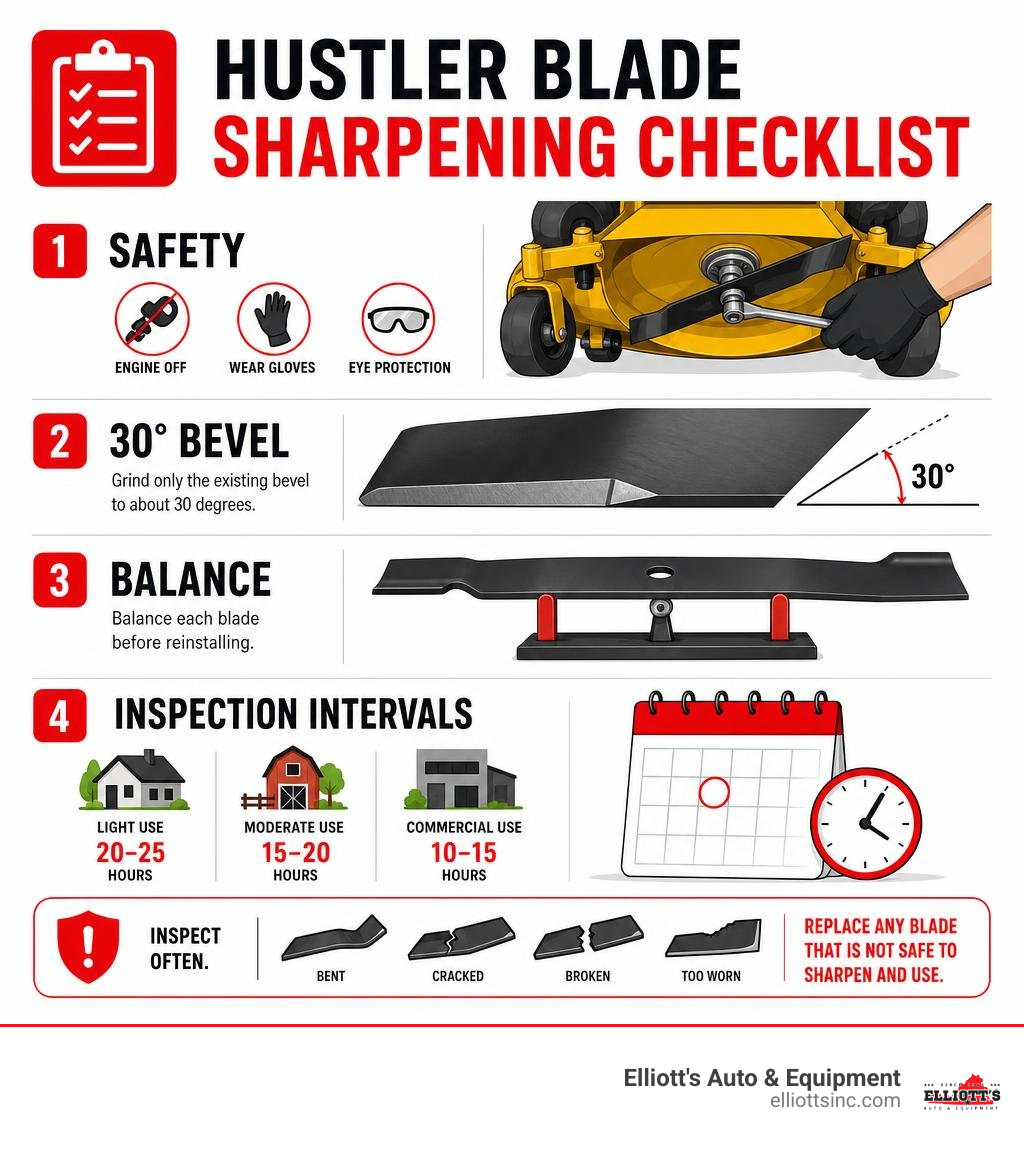
For effective Hustler zero turn blade sharpening, remove the blades safely, grind only the existing bevel to about 30 degrees, cool the steel often, and balance each blade before reinstalling it. Sharpen light-use residential blades about every 20-25 mowing hours, moderate-use blades every 15-20 hours, and commercial blades every 10-15 hours – sooner after contact with sand, sticks, or rocks.
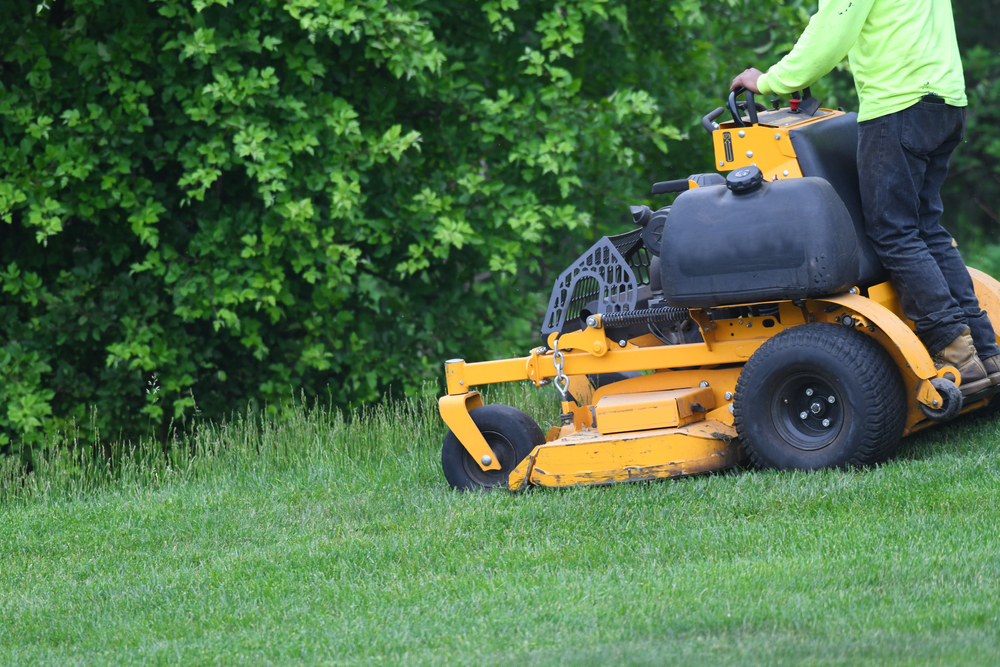
A sharp, balanced blade slices grass cleanly instead of tearing it. That means fewer brown tips, less strain on the engine, and a smoother-running deck. Inspect blades often, and replace any that are bent, cracked, broken, or too worn to sharpen safely.
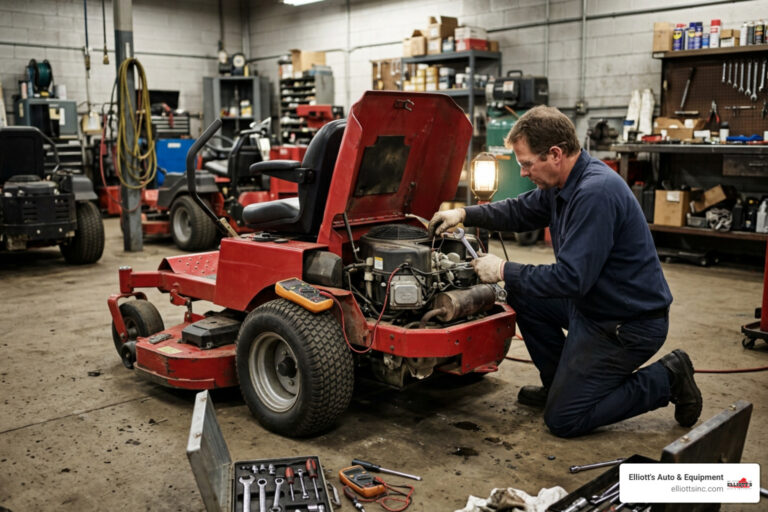
At Elliott’s Auto & Equipment in South Boston, Virginia, we help rural property owners maintain dependable equipment for demanding property work. Our experience with Hustler zero turn blade sharpening and Hustler zero-turn mowers helps customers protect cut quality, mower performance, and their investment.
Know your Hustler zero turn blade sharpening terms:
Why Regular Blade Maintenance and Sharpness Matter
When you operate a high-performance machine, blade condition directly dictates turf appearance and machine longevity. A dull blade acts like a blunt club spinning at extreme velocity; rather than slicing through the grass foliage cleanly, it violently rips and tears the plant tissue. This tearing leaves jagged, frayed leaf tips that quickly dry out and turn an unsightly bleached white or brown within twenty-four to forty-eight hours of cutting.
Beyond aesthetic degradation, ripped grass tips create wide, open wounds that expose turf to fungal pathogens, heat stress, and rapid dehydration. Agronomic studies, including cutting efficiency research from extension specialists, confirm that sharp cutting edges foster rapid plant healing and strong root development.
From a mechanical standpoint, dull cutting edges substantially increase aerodynamic drag and rotational resistance beneath the mower deck. Forcing blunt steel through dense grass bogs down engine RPM, straining belts, pulleys, and electric clutches. In fact, research published in the Agronomy Journal indicates that mowing with dull blades can reduce fuel economy by up to 22%. By maintaining clean cutting edges, your blades sustain optimum tip speed, which enhances the vacuum lift needed to stand grass upright for an immaculate, level cut. To better understand how deck aerodynamics and tip speeds interact across various cutting widths, review our ultimate guide to zero turn mowers.
Step-by-Step Guide to Hustler Zero Turn Blade Sharpening
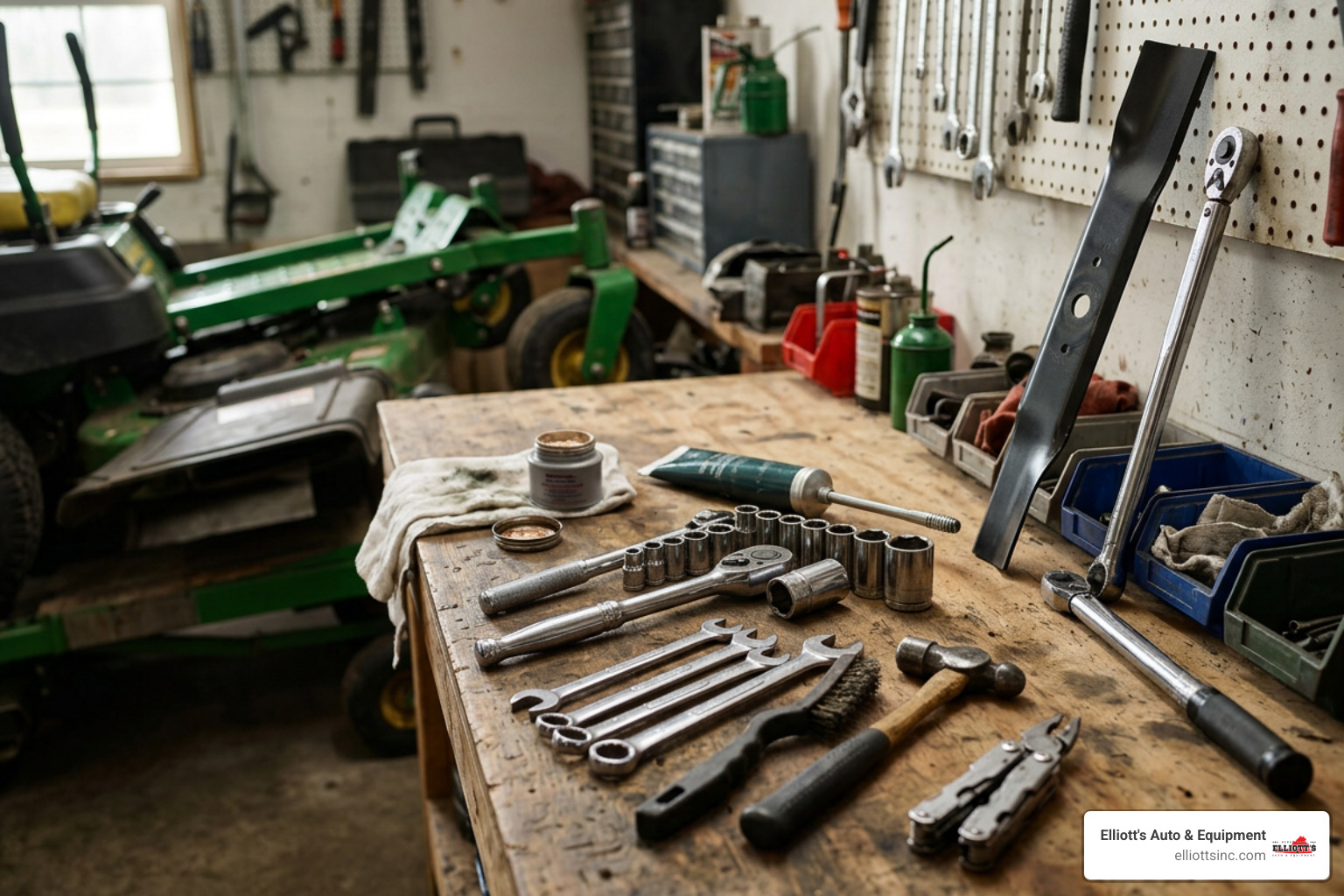
Sharpening zero-turn blades requires a systematic approach to ensure safety, balance, and edge geometry. Rushing through the process or using haphazard grinding methods can ruin the temper of the steel or introduce dangerous deck vibrations.
The maintenance frequency for your mower depends largely on property size, mowing frequency, and environmental abrasiveness:
| Usage Type | Average Mowing Frequency | Recommended Sharpening Interval | Typical Deck Size / Blade Count |
|---|---|---|---|
| Light Residential | 1 time per week | Every 20–25 operating hours | 42″ to 48″ Deck (2–3 Blades) |
| Moderate Residential | 2–3 times per week | Every 15–20 operating hours | 54″ to 60″ Deck (3 Blades) |
| Commercial / Abrasive Soil | Daily / High Acreage | Every 10–15 operating hours | 54″, 60″, or 72″ Deck (3 Blades) |
Recommended Tools for Hustler Zero Turn Blade Sharpening
Before starting, gather the appropriate equipment to complete the job efficiently:
- Grinding Equipment: An angle grinder fitted with a 40-grit to 60-grit flap disc offers superior control and smooth material removal. Alternatively, a dedicated bench grinder or specialized commercial blade sharpener with an angle guide works well.
- Hand Tools: A 10-inch or 12-inch flat bastard file for deburring, cleaning up minor nicks, and finishing the cutting face.
- Removal Tools: A 1/2-inch drive breaker bar or impact wrench, paired with a 15/16-inch heavy-duty socket (or appropriate size for your spindle hardware).
- Deck Safety Hardware: A heavy-duty floor jack, commercial mower lift, and rated jack stands. Never rely solely on hydraulic jacks.
- Deck Blocking: A 2×4 wooden block or specialized metal blade-locking clamp to prevent blade rotation during bolt removal.
- Balancing & Torque Tools: A precision cone balancer or magnetic wall-mounted blade balancer, along with a calibrated foot-pound torque wrench.
- Personal Protective Equipment (PPE): Heavy leather mechanics gloves, ANSI-rated safety glasses, a face shield, and a dust mask.
Safety Protocol Before Hustler Zero Turn Blade Sharpening
Safety is paramount whenever working beneath a cutting deck. Before touching any hardware, follow these essential safety steps outlined in factory service instructions:
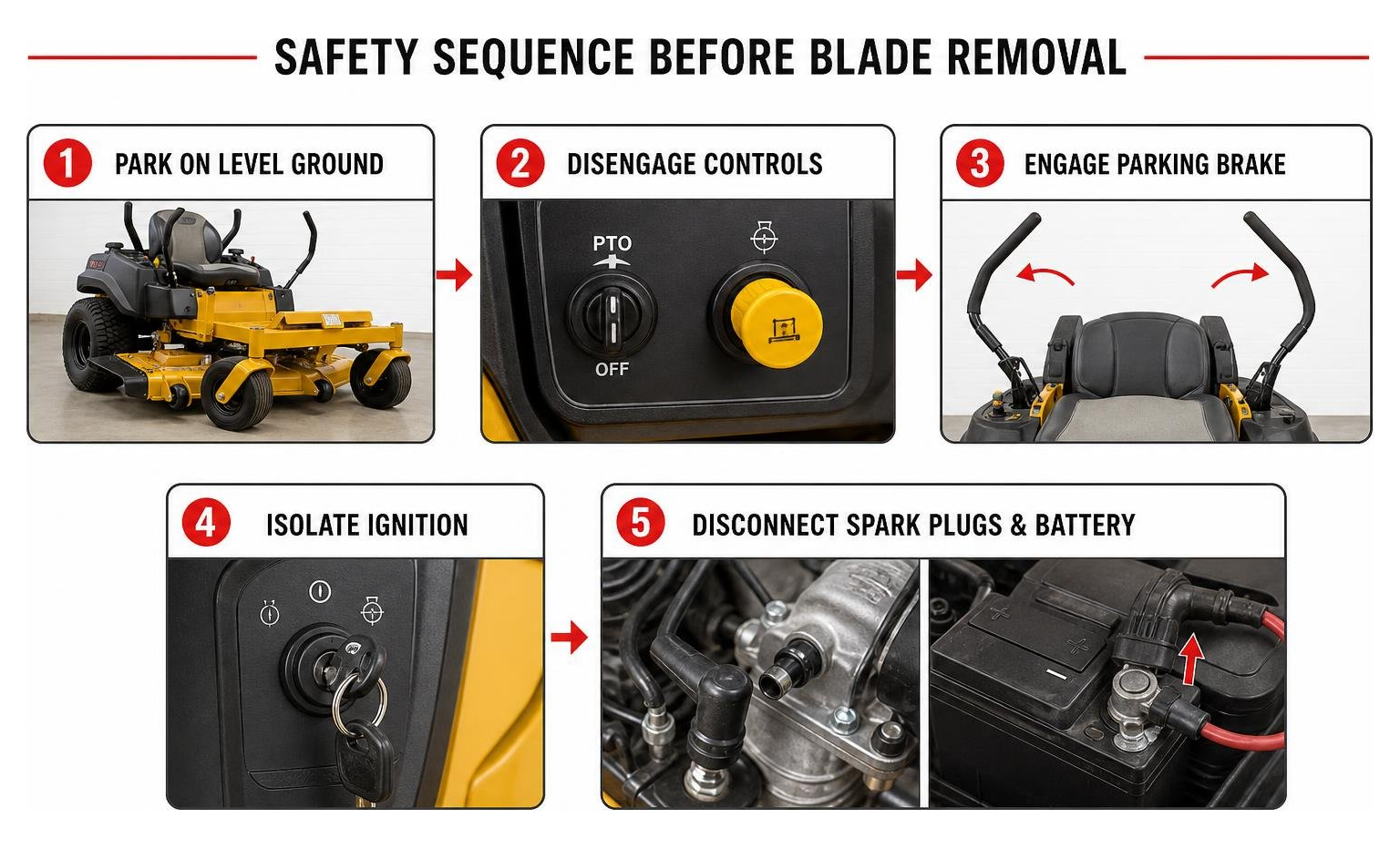
- Park on Level Ground: Park the mower on a smooth, solid concrete floor.
- Disengage Controls: Move the electric deck clutch (PTO) switch to the “OFF” or disengaged position.
- Engage Parking Brake: Set the steering control levers outward into the locked neutral/park brake position.
- Isolate Ignition: Turn the ignition key to “OFF” and remove it from the switch.
- Disconnect Spark Plugs & Battery: Pull the spark plug boots off the spark plugs. For added security, disconnect the negative battery terminal to eliminate any possibility of accidental cranking.
- Secure the Machine: Elevate the front of the mower using a heavy-duty lift or floor jack, and immediately set certified jack stands beneath the frame. Chock the rear drive tires to prevent rolling.
- Wear Protection: Put on heavy leather gloves and eye protection before handling bare blades.
Blade Removal and Deck Preparation
With the mower securely elevated on jack stands, inspect the underside of the cutting chamber. Clean out packed grass clippings, dirt, and debris from the deck baffles using a putty knife; caked grass disrupts airflow and hampers cutting performance.
To remove the blades:
- Block Blade Movement: Wedge a short length of 2×4 scrap wood between the blade tip and the inner deck wall, or attach a blade clamp to prevent the spindle from rotating.
- Loosen the Spindle Bolt: Place a 15/16-inch socket onto the bottom 5/8-inch cap screw. Turn counterclockwise (standard right-hand thread) using a breaker bar or impact wrench.
- Note Hardware Orientation: As the bolt slides out, pay close attention to the hardware stack. Hustler spindles utilize a heavy hardened washer (cupped Belleville washer) between the bolt head and the blade. The concave or cupped side of the spring washer must face upward against the blade bottom during reassembly.
- Repeat for All Spindles: Remove all three blades on 54-inch or 60-inch decks, keeping each bolt set organized. Understanding the heavy-duty commercial spindle assemblies on premium models is simple when you study our breakdown of FasTrak deck features.
Grinding Technique and 30-Degree Bevel Angle
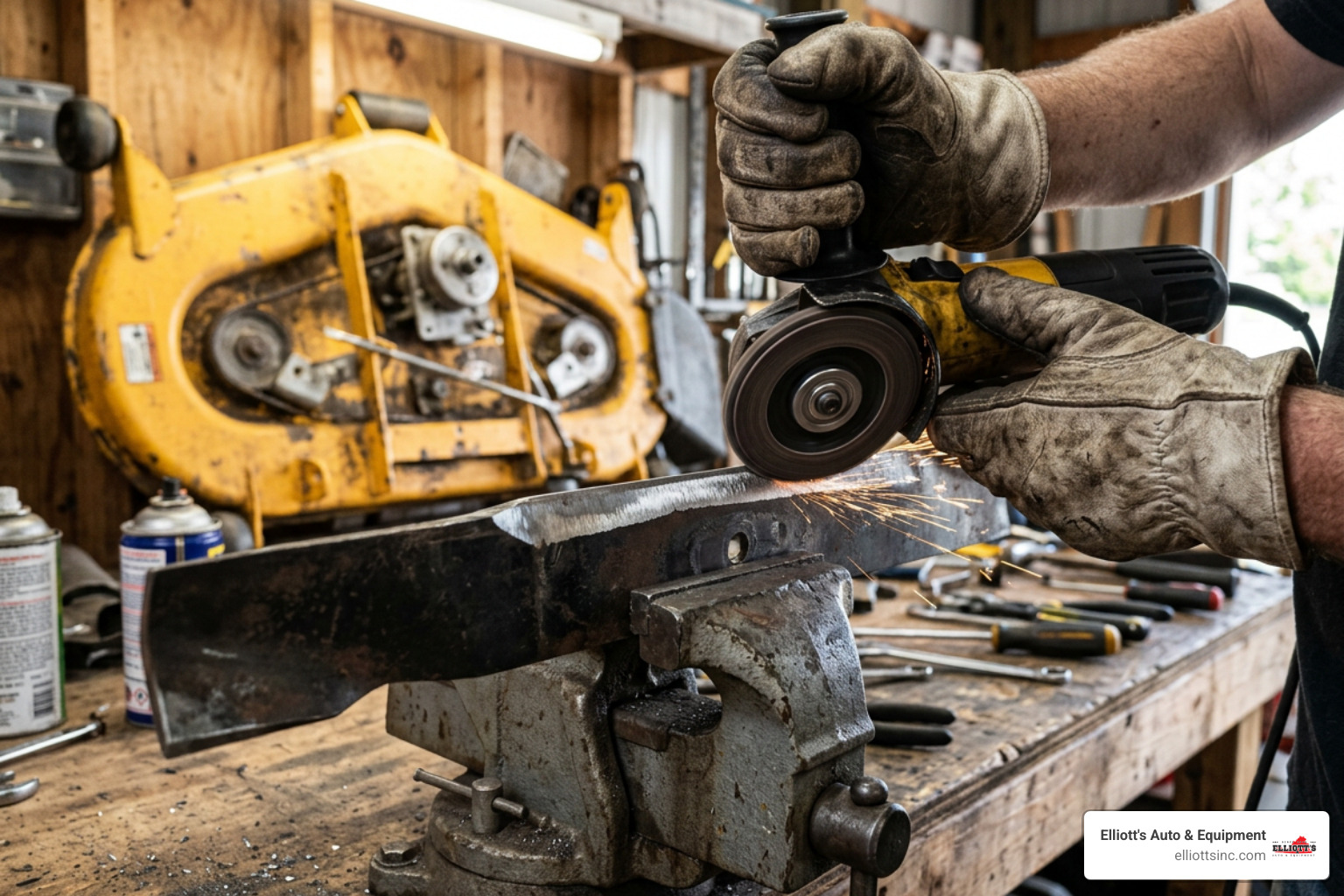
Once removed, clamp the blade firmly into a heavy bench vise with the beveled cutting edge facing upward.
- Clean the Blade: Use a wire brush or scraper to remove dried turf sap and surface rust from both sides of the blade sail and cutting surface.
- Match the Factory Angle: Most commercial and residential zero-turn mower blades use a factory bevel angle of approximately 30 degrees (typically between 28 and 32 degrees). Grind exclusively on the top beveled edge. Never grind the flat bottom surface of the blade.
- Maintain Even Sweeps: When using an angle grinder with a 60-grit flap disc, stroke smoothly from the inside of the cutting edge outward toward the tip. Use light to moderate pressure, keeping the disc flat against the 30-degree bevel. Count your passes on each side to remove a comparable amount of steel.
- Prevent Overheating: Never let the steel get red-hot or turn blue. Blue or blackened steel indicates that excessive friction has ruined the heat-treatment (temper), making the metal brittle and prone to chipping. If the steel warms significantly, pause and allow it to cool, or quench it in water.
- Leave a Butter-Knife Edge: Avoid grinding the edge razor-sharp. A razor edge is fragile and easily rolls over, chips, or dulls within minutes of contacting tough turf or small twigs. Aim for a clean, consistent cutting edge with the thickness of a standard butter knife (roughly 1/64 to 1/32 of an inch).
- Deburr the Backing: After grinding the bevel, unclamp the blade, flip it over, and run a flat hand file lightly along the bottom edge to remove any hanging wire burrs.
Balancing and Reinstalling the Blades
Grinding steel off a mower blade alters its weight distribution. An unbalanced blade spinning at over 3,000 RPM creates severe high-frequency harmonics that wear out spindle bearings, crack deck welds, and loosen mounting hardware.
- Test the Balance: Place the center 5/8-inch mounting hole onto a precision wall-mounted magnetic balancer or cone balancer.
- Identify the Heavy Side: If the blade dips to one side, that end contains excess mass.
- Correct the Weight: Never grind metal off the cutting edge to fix balance. Instead, grind a light amount of metal off the back blunt side or the lifted sail of the heavy end. Re-test until the blade rests perfectly horizontal.
- Position the Blade: Orient the blade correctly. The raised aerodynamic lift sails must face upward toward the underside of the deck, while the flat surface faces the grass.
- Reinstall Hardware: Slide the 5/8-inch cap screw through the cupped spring washer (dish facing up toward the blade) and thread it into the spindle shaft by hand to prevent cross-threading.
- Torque to Spec: Secure the blade with your wood block and use a calibrated torque wrench to tighten the bolt to factory specification (typically 75 to 100 ft-lbs on standard Hustler residential decks, and up to 118 ft-lbs on heavy commercial spindles).
If you notice lingering vibration after balancing or need professional deck servicing, book an appointment with our local mower repair shop.
When to Replace Blades vs. Upgrading to LaserEdge Technology
While regular sharpening significantly prolongs blade life, mower blades are consumable wear items that do not last indefinitely. Standard steel blades typically last between 100 and 150 mowing hours under normal working conditions before structural wear compromises their safety.
When to Retire Old Blades
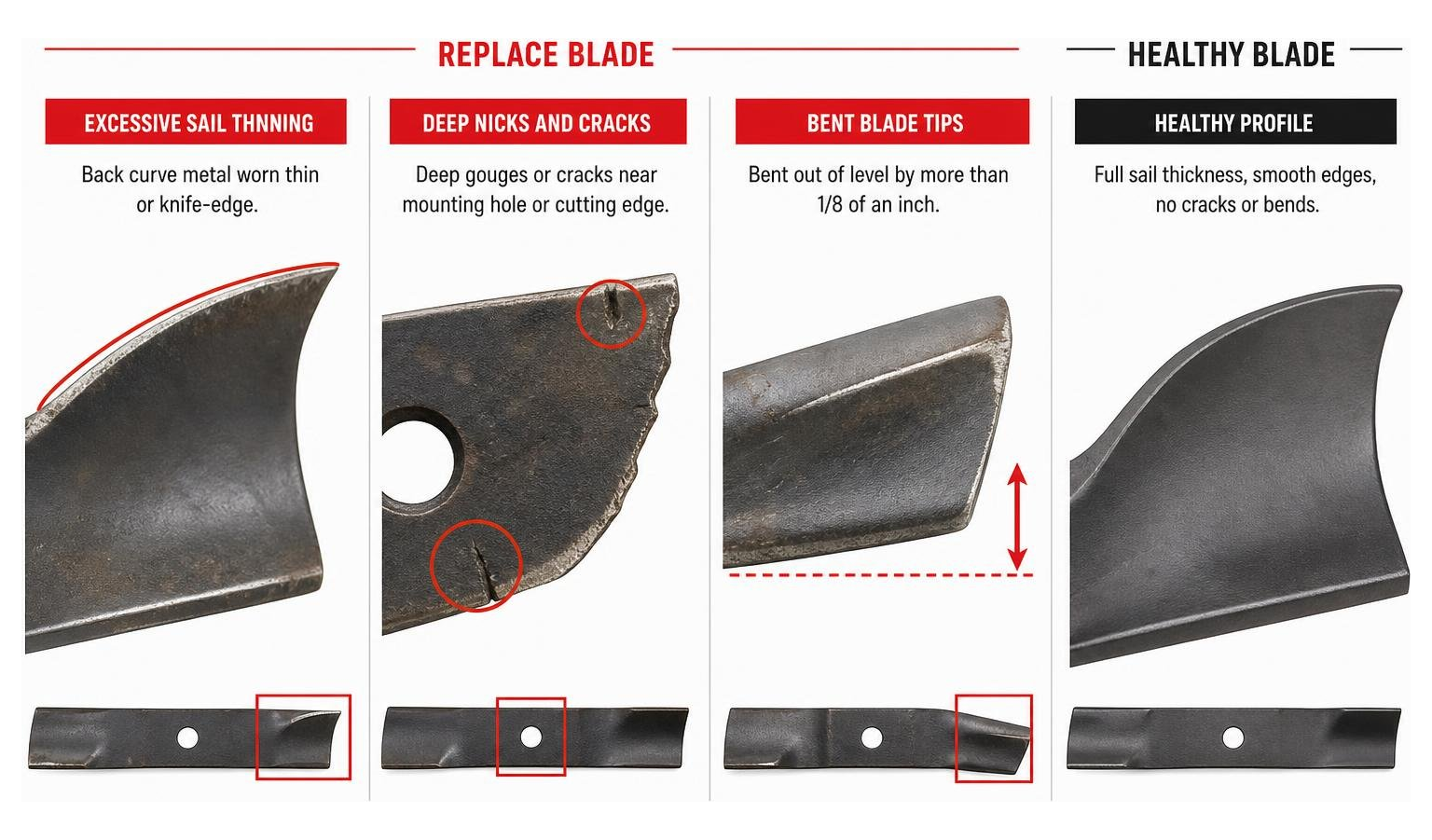
Replace your blades immediately if you notice:
- Excessive Sail Thinning: The curved aerodynamic sail at the back of the blade lifts grass for an even cut. Sand and abrasive soil erode this sail over time. If the metal wears thin or develops a “knife-edge” on the back curve, it can break off during operation and turn into a high-speed projectile.
- Deep Nicks and Cracks: Deep gouges from rocks or visible hairline cracks anywhere near the center mounting hole or cutting edge warrant immediate disposal.
- Bent Blade Tips: If a blade strikes a stump or hidden pipe and bends out of level by more than 1/8 of an inch, do not attempt to heat, bend, or weld it back into shape. Bending fatigues the molecular structure of the steel, making catastrophic failure likely.
Upgrading to LaserEdge EverSharp Technology
For owners seeking to reduce maintenance downtime, upgrading to Hustler LaserEdge EverSharp blades provides a durable alternative. Manufactured from heat-treated Marbain alloy steel, LaserEdge blades feature a laser-applied tungsten-carbide composite overlay fused to the underside of the cutting edge.
As the mower runs, the softer top steel wears away gradually, exposing a fresh, hardened carbide edge. This engineered differential wear pattern allows the blade to remain sharp for up to 50 operating hours without manual grinding—even in abrasive, sandy soil where conventional blades dull in four to six hours. For genuine replacement blades, spindle assemblies, and deck accessories, rely on our authorized Hustler dealer support.
Frequently Asked Questions About Mower Blade Care
How often should Hustler mower blades be sharpened?
For typical residential yards, blades should be sharpened every 15 to 25 operating hours (or roughly two to three times per mowing season). Commercial operators should inspect and touch up blade edges every 10 to 15 hours. If you cut in sandy soil or frequently hit fallen branches, check the blades weekly.
What is the correct torque specification for reinstalling Hustler blades?
Hustler zero-turn mower blades secured by a 5/8-inch spindle cap screw should be torqued to 75–100 ft-lbs (100–135 N·m) on residential and light commercial decks, and up to 118 ft-lbs on heavy-duty commercial machines. Always use a calibrated torque wrench and verify that the concave side of the Belleville washer presses firmly against the blade.
Can bent or cracked mower blades be repaired?
No. Never attempt to straighten, weld, or heat a bent or cracked mower blade. Heating ruins the factory tempering of the steel, while welding creates brittle stress points. A compromised blade spinning at full operating speed can shatter unexpectedly, causing severe deck damage or catastrophic injury.
Conclusion
Maintaining sharp, well-balanced blades is one of the most effective ways to preserve your turf’s health, maximize fuel efficiency, and protect your mower’s deck components. By committing to regular inspections, keeping your bevels ground to a clean 30-degree profile, and maintaining proper spindle torque, your machine will consistently deliver smooth, professional striping.
At Elliott’s Auto & Equipment in South Boston, Virginia, we take pride in supporting our local landowners, small farms, and lawn care contractors. We only sell new Hustler zero-turn lawn mowers for residential and commercial customers, alongside comprehensive parts, warranty support, and routine maintenance. Whether you need a fresh set of OEM blades, a mid-season spindle tune-up, or full seasonal servicing, schedule your visit with our expert zero-turn maintenance service team today.