Complete Guide to Mahindra Tractor Maintenance Virginia Landowners Rely On
Taking care of heavy-duty equipment requires a consistent routine. Mahindra tractors are celebrated across Southern Virginia for their rugged steel construction, high lift capacity, and powerful engines. However, even the most durable iron needs regular attention to deliver optimal performance through humid summers, muddy springs, and brisk winters.
Establishing a scheduled maintenance plan protects your mechanical components from early wear and tear while saving you significant money on preventable repairs.
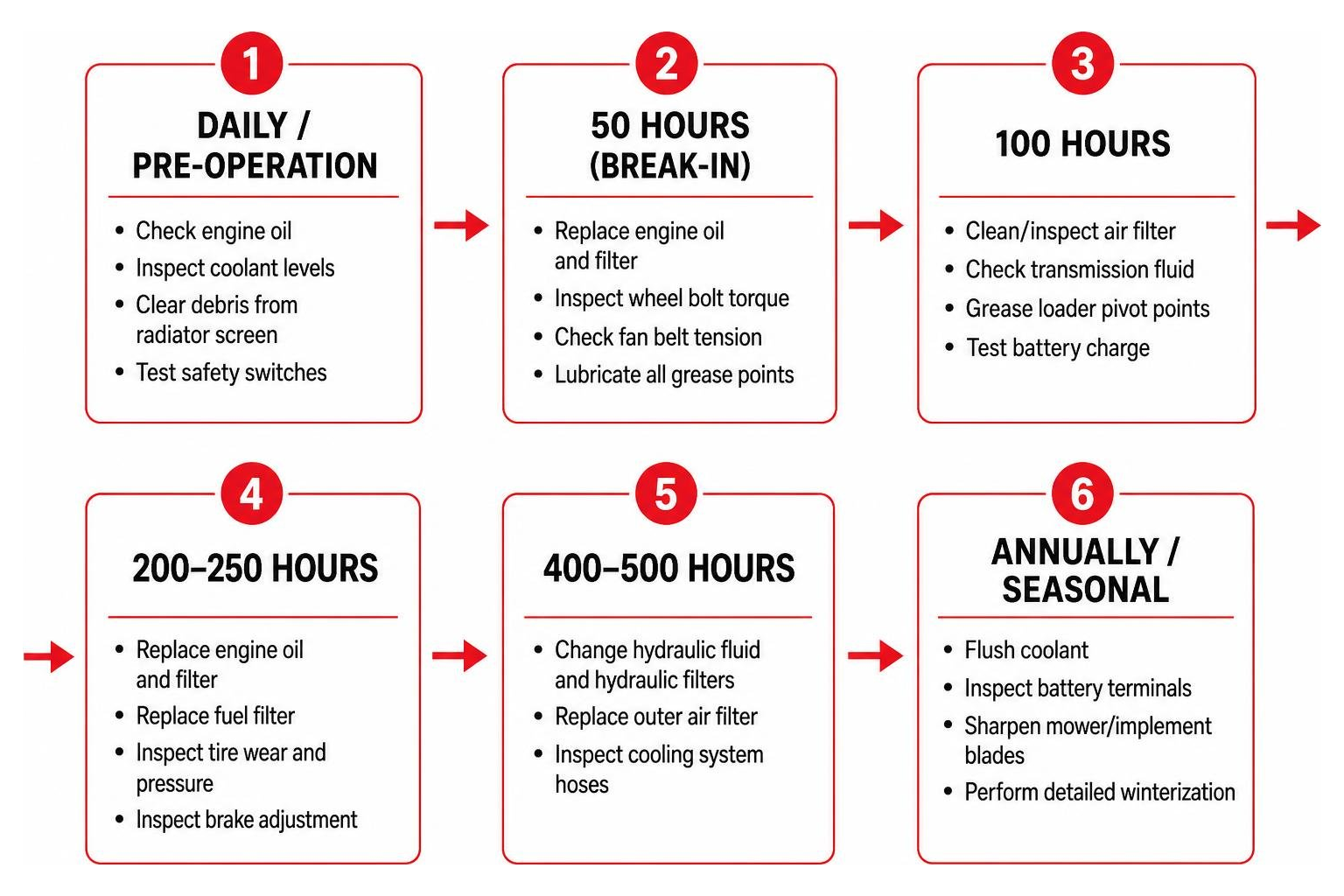
| Service Interval | Maintenance Tasks Required | Primary System Focus |
|---|---|---|
| Daily / Pre-Operation | Check engine oil, inspect coolant levels, clear debris from radiator screen, test safety switches | Engine & Safety |
| 50 Hours (Break-In) | Replace engine oil and filter, inspect wheel bolt torque, check fan belt tension, lubricate all grease points | Engine, Chassis, & Hydraulics |
| 100 Hours | Clean/inspect air filter, check transmission fluid, grease loader pivot points, test battery charge | Intake & Moving Parts |
| 200–250 Hours | Replace engine oil and filter, replace fuel filter, inspect tire wear and pressure, inspect brake adjustment | Powertrain & Fuel System |
| 400–500 Hours | Change hydraulic fluid and hydraulic filters, replace outer air filter, inspect cooling system hoses | Hydraulics & Cooling |
| Annually / Seasonal | Flush coolant, inspect battery terminals, sharpen mower/implement blades, perform detailed winterization | Full Machine Readiness |
Engine Oil, Fluid Levels, and Filter Replacement Schedule
The lifeblood of your diesel engine is clean oil and uncontaminated fuel. Over operating hours and long winter rests, condensation can collect in fluid reservoirs, degrading the protective qualities of lubricants.
When servicing your Mahindra:
- Engine Oil and Filter: Change your oil according to your operator manual intervals. Always replace the oil filter at every oil change to capture microscopic metal shavings and soot.
- Fuel System and Filters: Diesel fuel systems operate under intense pressure. Replace primary and secondary fuel filters to protect sensitive injectors from moisture and fine particulates. Routinely inspect rubber fuel lines for dry rot, stiffness, or subtle weepage.
- Air Filtration: Virginia pollen, dust, and field chaff quickly clog engine air elements. Tap out dry debris from the outer canister regularly and replace filters when airflow becomes restricted.
If you are preparing equipment for long rests during colder months, review our guide to winterizing your farm equipment to protect fluid reservoirs from freezing and corrosion.
Hydraulic System Inspection and Greasing Critical Pivot Points
Whether you run a front-end loader to move round bales or a backhoe to trench utility lines, your hydraulic system delivers the heavy lifting. Checking hydraulic fluid level on level ground ensures that pumps and cylinders operate without cavitation or overheating.
Inspect all hydraulic hoses for signs of chafing, cracking, or pinhole leaks. Wipe quick-disconnect couplers clean before plugging in attachments to keep abrasive dirt out of internal valves.
Do not overlook your grease zerks. Apply fresh multi-purpose lithium grease to:
- Front loader pivot pins and cylinder mounts
- Three-point hitch lift arms and top link threads
- Front axle pivot bearings and tie rod ends
- Steering cylinder linkage joints
- Backhoe boom, dipper, and bucket pins
Frequent lubrication pushes out abrasive grit, minimizes metal-on-metal friction, and keeps heavy implements cycling smoothly.
Essential Seasonal Checklist for Mahindra Tractor Maintenance Virginia Properties Require
Virginia’s fluctuating climate requires extra vigilance when transitioning between seasons. In spring, warming temperatures cause insects and rodents to build nests in hidden cavities, while summer brings dust that taxes cooling systems.
Before ramping up field work, execute a thorough seasonal check:
- Clear Radiator Screens: Remove chaff, weed seeds, and dust from the front radiator screen and oil cooler to avoid engine overheating during humid afternoons.
- Examine Coolant Condition: Check the antifreeze level in the recovery tank and inspect radiator hoses for soft spots or brittle clamps.
- Inspect Belt Integrity: Check tension and look for cracking on fan and alternator drive belts.
- Test Implements and PTO: Ensure PTO shafts slide freely, universal joints are greased, and safety shields spin freely without binding.
Reviewing a detailed spring maintenance checklist helps you systematically tackle these points before field season peaks. If you are operating outside our local service territory, you can also Locate a dealer – Mahindra USA to source certified support.
Mechanical, Battery, and Tire Upkeep for Peak Performance

Tractor reliability depends on the condition of your electrical system, traction surfaces, and cutting attachments. Addressing minor physical and mechanical wear before heading into the pasture prevents mid-job breakdowns.
Battery Diagnostics and Electrical Maintenance After Winter Storage
Cold winter months accelerate battery power loss. When a tractor sits unused, parasitic draw and chemical slowing leave the battery undercharged, placing heavy strain on the alternator and starter motor.
Begin your electrical inspection by examining terminal posts for white or blue-green powdery corrosion. Clean the posts and cable clamps with a wire brush and a mixture of water and baking soda, rinse with clean water, and apply a thin layer of dielectric grease or protective terminal spray.
Test open-circuit voltage with a digital multimeter:
- 12.6V or higher: Fully charged and ready for operation.
- 12.2V to 12.4V: Partially discharged; charge with a dedicated smart charger.
- Below 12.0V: Deeply discharged; test battery load capacity and check for sulfated internal cells.
For machines parked between seasonal tasks, connecting an automatic trickle charger or battery maintainer preserves cell longevity and guarantees swift starts on crisp mornings.
Sharpening Blades, Inspecting Drive Belts, and Tire Pressure Calibration
If you use your tractor with a mid-mount mower, rotary cutter, or finish mower, clean cutting edges are essential for turf health and fuel efficiency.
- Mower Blades: Dull blades tear grass fibers instead of slicing cleanly, leaving ragged brown tips and inviting plant disease. Remove blades to grind a clean, balanced cutting edge, or install fresh OEM replacements if edges are gouged.
- Drive Belts: Inspect all deck and implement drive belts. Replace belts showing frayed edges, uneven sidewall wear, or glazing, and adjust tension springs to factory specifications.
- Tire Pressure and Tread: Cold temperatures cause pneumatic tires to lose air over time. Adjust tire pressures based on your specific terrain and task. Lower pressures improve traction in soft Virginia clay, while higher pressures provide sidewall stability for heavy front-end loader work. Check for dry rot cracking along sidewalls and inspect rims for impact bends.
How Routine Maintenance Maximizes Longevity, Safety, and Fuel Efficiency
A disciplined maintenance routine does more than prevent surprise breakdowns; it protects operator safety, lowers fuel expenditures, and preserves the long-term trade-in value of your equipment.
Cleaning Debris, Verifying Safety Switches, and Protecting Resale Value
Keeping your machine clean prevents moisture and organic debris from corroding electrical harness connections or trapping heat against mechanical components. Wash off mud and manure after heavy work, and clear packed grass from mower decks to halt deck rust.
Regularly verify essential safety mechanisms:
- Operator Presence Control (Safety Seat Switch): Confirms the engine cuts off if the operator leaves the seat while the PTO is engaged.
- Neutral Safety & Clutch Switches: Ensures the starter will not engage while the transmission or PTO is active.
- Roll-Over Protective Structure (ROPS): Ensure mounting hardware is torqued securely and pins lock into place without modification.
- Lighting & Flashers: Verify high-visibility headlights, hazard flashers, and turn signals operate correctly for road travel.
A complete service record and a clean, undamaged machine dramatically increase trade-in equity when upgrading equipment down the road. For landowners weighing a new machine purchase, discovering why should you buy a Mahindra tractor highlights how heavy-gauge steel engineering rewards regular upkeep with decades of dependable service.
Fuel Economy Gains Through Proactive Mahindra Tractor Maintenance Virginia Schedules
Dirty air filters and restricted fuel delivery force diesel engines to work significantly harder, burning excess fuel to generate baseline power.
Regular maintenance boosts operating efficiency by:
- Ensuring Clean Air Ingestion: Clean filters deliver optimal air-to-fuel ratios, ensuring complete diesel combustion.
- Reducing Parasitic Drivetrain Drag: Fresh gear lubricants in front axles and transmission cases reduce internal friction.
- Minimizing Implement Drag: Sharp cutting blades and properly greased gearbox spindles allow tractors to operate in higher gears at lower throttle settings.
Partnering with an authorized dealer simplifies your seasonal upkeep schedule. Learning how tractor dealerships can simplify equipment maintenance shows how professional fluid sampling, OEM diagnostic tools, and structured service packages take the guesswork out of ownership.
Frequently Asked Questions About Tractor Service in Virginia
Where can I find authorized Mahindra service and genuine parts in South Boston, VA?
You can find full factory-backed support at Elliott’s Auto & Equipment, located at 3020 Bill Tuck Hwy, South Boston, VA 24592. Our service department stocks genuine OEM filters, fluids, replacement parts, and attachments, paired with certified technicians who understand Mahindra mechanical and hydraulic systems.
What are the most critical spring maintenance steps for Mahindra equipment?
The most critical spring steps include:
- Checking engine oil, coolant, and hydraulic fluid levels.
- Inspecting and replacing fuel and air filters.
- Testing battery charge and scrubbing terminal corrosion.
- Lubricating all loader and chassis grease zerks.
- Calibrating tire pressures to match upcoming fieldwork.
- Cleaning cooling fins and radiator debris screens.
How often should hydraulic fluid and engine filters be changed?
Most Mahindra models require an initial break-in oil and filter service at 50 operating hours. Following break-in, engine oil and engine filters are typically changed every 100 to 250 hours (or annually), while hydraulic fluid and hydraulic filters are replaced every 400 to 500 operating hours. Always consult your specific model operator manual for exact service intervals.
Conclusion
Keeping your tractor running at peak capability does not have to be complicated. By staying ahead of fluid changes, greasing pivot points, monitoring tire conditions, and testing safety systems, you protect your machine against premature wear and ensure it starts dependably every time duty calls.
When your equipment requires factory diagnostics, scheduled interval maintenance, genuine replacement filters, or new heavy-duty attachments, our team is here to assist. Visit Elliott’s Auto & Equipment at 3020 Bill Tuck Hwy in South Boston, VA, or schedule your next professional tractor service with us today.