Understanding Dimensions, Types, and Capacities of the 32 Foot Trailer
When sizing up a trailer in this category, understanding the differences across deck formats, weight limits, and physical footprints is essential. A 32-foot platform serves different industries depending on its configuration—from enclosed motorsports hauling to heavy civil construction transport and mobile jobsite storage.
| Trailer Configuration | Typical GVWR Range | Usable Payload Capacity | Usable Floor / Volume Area | Primary Hauling Application |
|---|---|---|---|---|
| Enclosed Cargo / Car Hauler | 9,990 – 14,000 lbs | 5,300 – 9,400 lbs | ~270 sq ft (approx. 1,800–2,000 cu ft) | Race cars, classic vehicles, tools, commercial freight |
| Gooseneck Flatbed (Low-Pro) | 24,000 – 25,900 lbs | 15,000 – 16,500 lbs | ~272 sq ft (32′ x 102″ full deck) | Skid steers, mini-excavators, steel, agricultural machinery |
| Commercial Storage Van | 20,000 – 45,000 lbs | 15,000 – 35,000 lbs | ~250 sq ft (2,000–2,300 cu ft) | Pallet staging, dry goods storage, jobsite material holding |
The physical footprint of an enclosed cargo model measures roughly 8.5 feet (102 inches) wide, providing more than 270 square feet of floor space. Exterior rooflines generally range from 7 feet 10 inches to 8 feet 4 inches, while standard interior heights range between 6 feet 6 inches and 7 feet. In contrast, dry-van-style storage units stand raised at dock height on dedicated running gear, yielding up to 2,300 cubic feet of dry volume with full 9-foot interior ceilings.
Choosing an Enclosed 32 Foot Trailer for Vehicles and Cargo
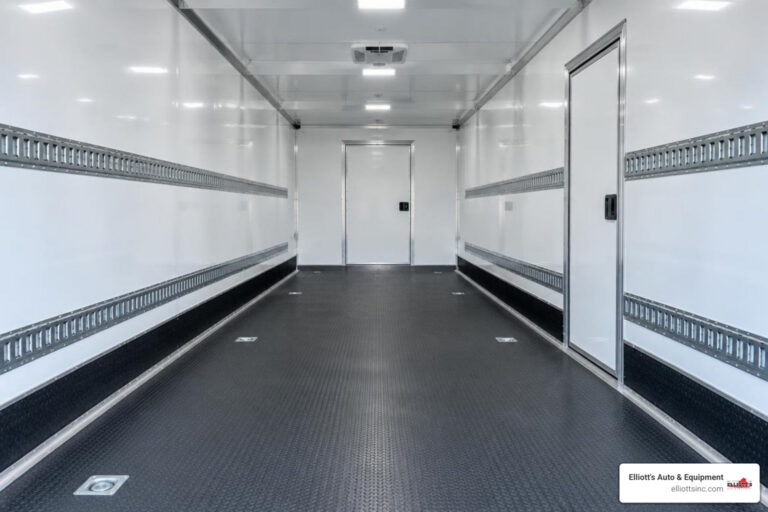
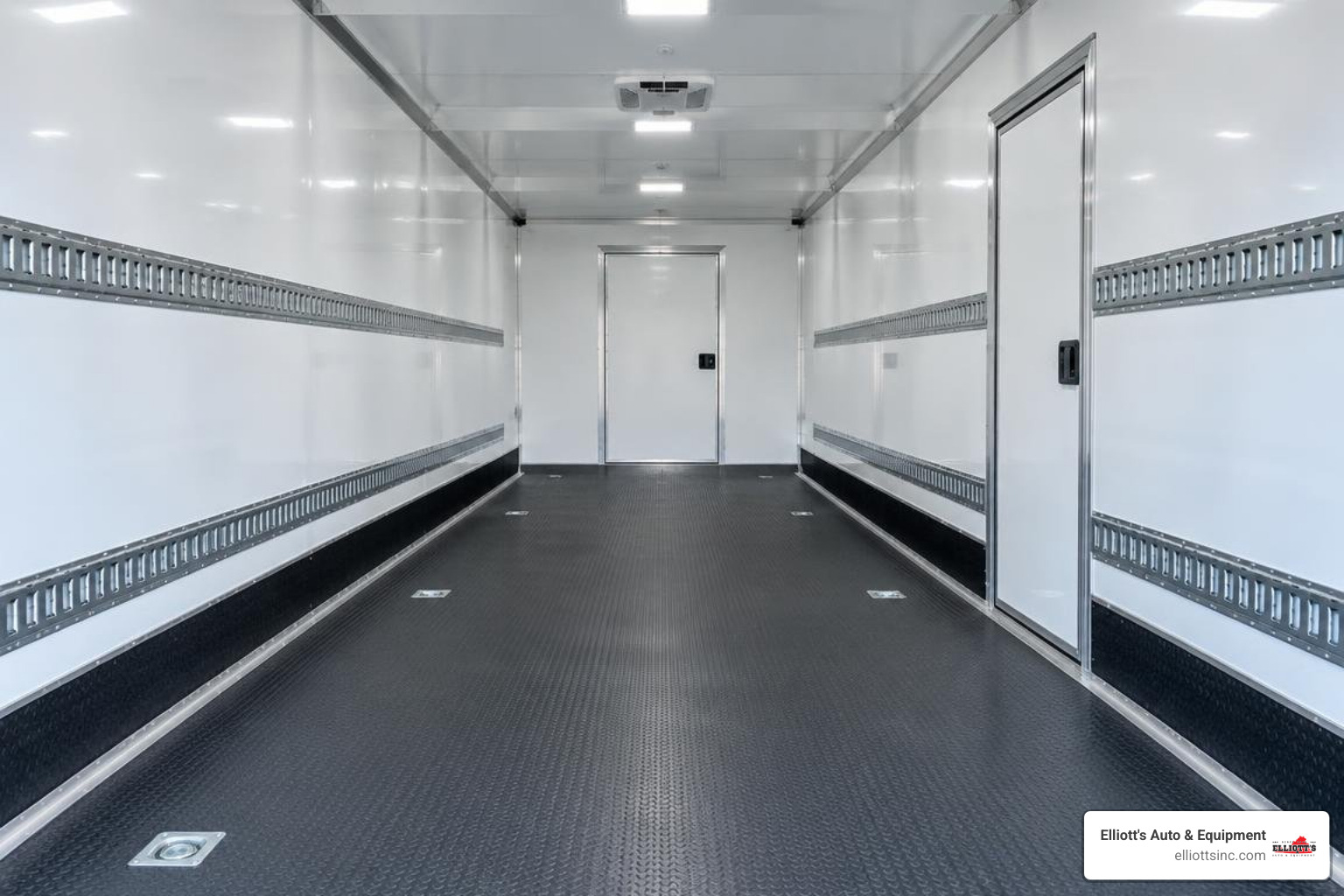
An enclosed hauler built on a 32-foot frame serves contractors, race teams, and equipment operators who require weatherproof security. Typical builds utilize dual 5,200 lb, 6,000 lb, or heavy-duty 7,000 lb tandem torsion axles, producing gross vehicle weight ratings (GVWR) between 9,990 lbs and 14,000 lbs. An empty double-axle frame typically weighs roughly 4,600 lbs, yielding a net payload capacity of 5,390 lbs on an entry 10K package, while a 14,000 lb GVWR package allows up to 9,400 lbs of gear.
Key functionality comes down to exterior skin construction and entry options. Modern configurations use 0.080 polycore semi-screwless exterior sheets to handle thermal expansion while resisting surface wrinkling. For vehicle transport, selecting an escape door over the driver’s side wheel box prevents climbing out of car windows after parking. Standard equipment packages also feature full-width rear ramp doors, side entry doors, and heavy-duty frame-welded D-rings.
Flatbed and Low-Pro Gooseneck Configurations
When tasks shift from boxed freight to construction equipment, a low-profile gooseneck flatbed trailer becomes the standard tool. Utilizing heavy I-beam mainframes (such as 12-inch 19 lb steel I-beams), these decks handle rigorous stresses. Two 12,000 lb dual-wheel axles deliver GVWRs between 24,000 lbs and 25,900 lbs, supporting payloads above 15,000 lbs.
For specialized heavy transport, modular platforms can be configured to meet commercial motor vehicle safety standards, matching components like Intra-Ax air ride suspensions, Bendix ABS systems, and high-tensile web construction. The low-pro deck design keeps the deck height near 33 to 36 inches from the ground, significantly reducing the ramp transition angle for tracked machinery and wheeled loaders.
Tow Vehicle Requirements and Hitch Configurations
Matching a 32-foot trailer to an appropriate tow rig prevents dangerous suspension sag, poor braking response, and drivetrain strain. Sizing calculations require examining the tow vehicle’s Gross Combined Weight Rating (GCWR), rear Gross Axle Weight Rating (GAWR), and hitch ratings rather than relying solely on advertised maximum pull numbers. For a deeper look at how trailer weight ratings and axle configurations affect real-world towing, the National Highway Traffic Safety Administration’s towing safety guidance covers key principles for safe trailering.
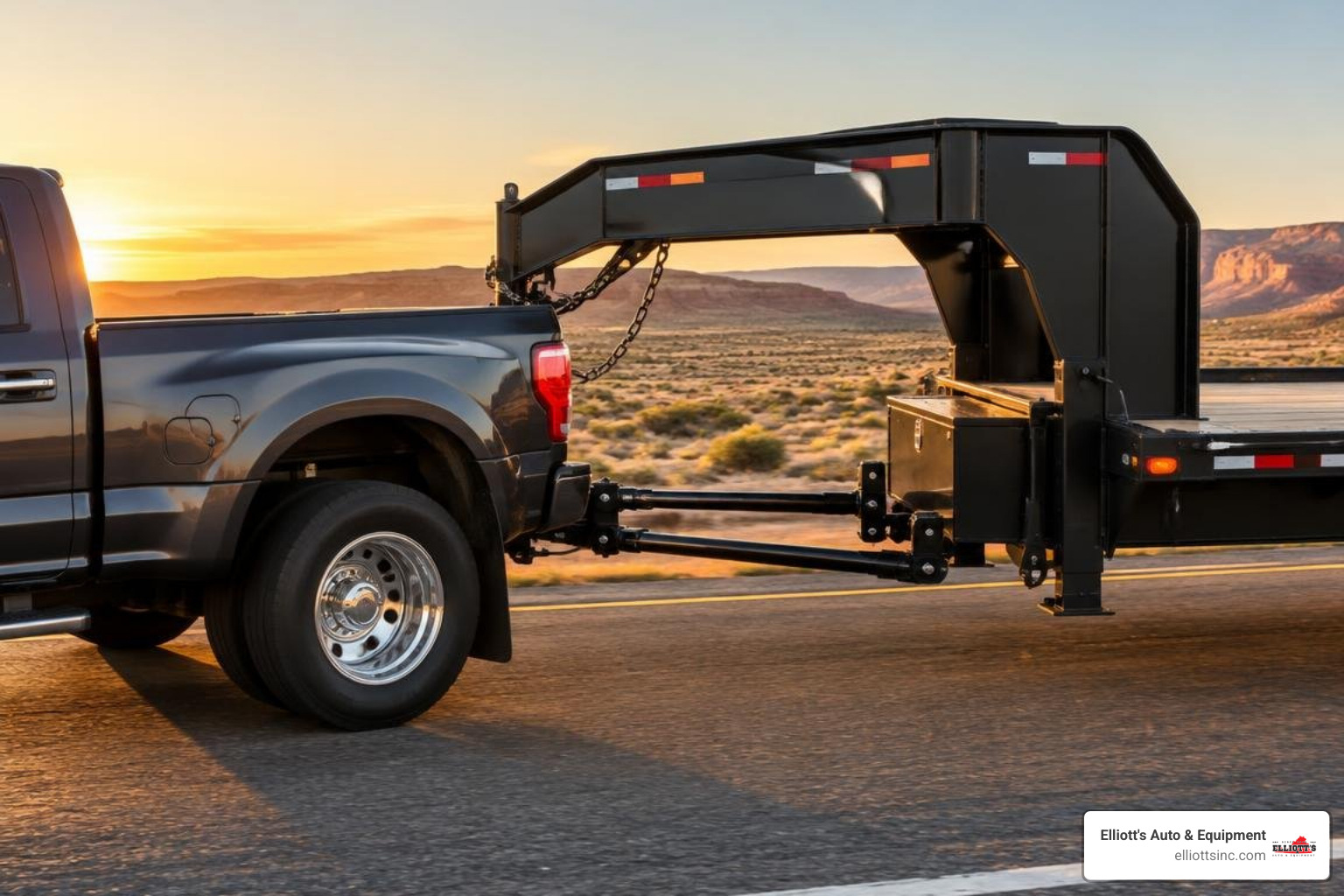
Gooseneck vs. Bumper Pull Dynamics
Connecting a 32-foot trailer via a gooseneck hitch versus a traditional rear receiver hitch fundamentally changes vehicle handling:
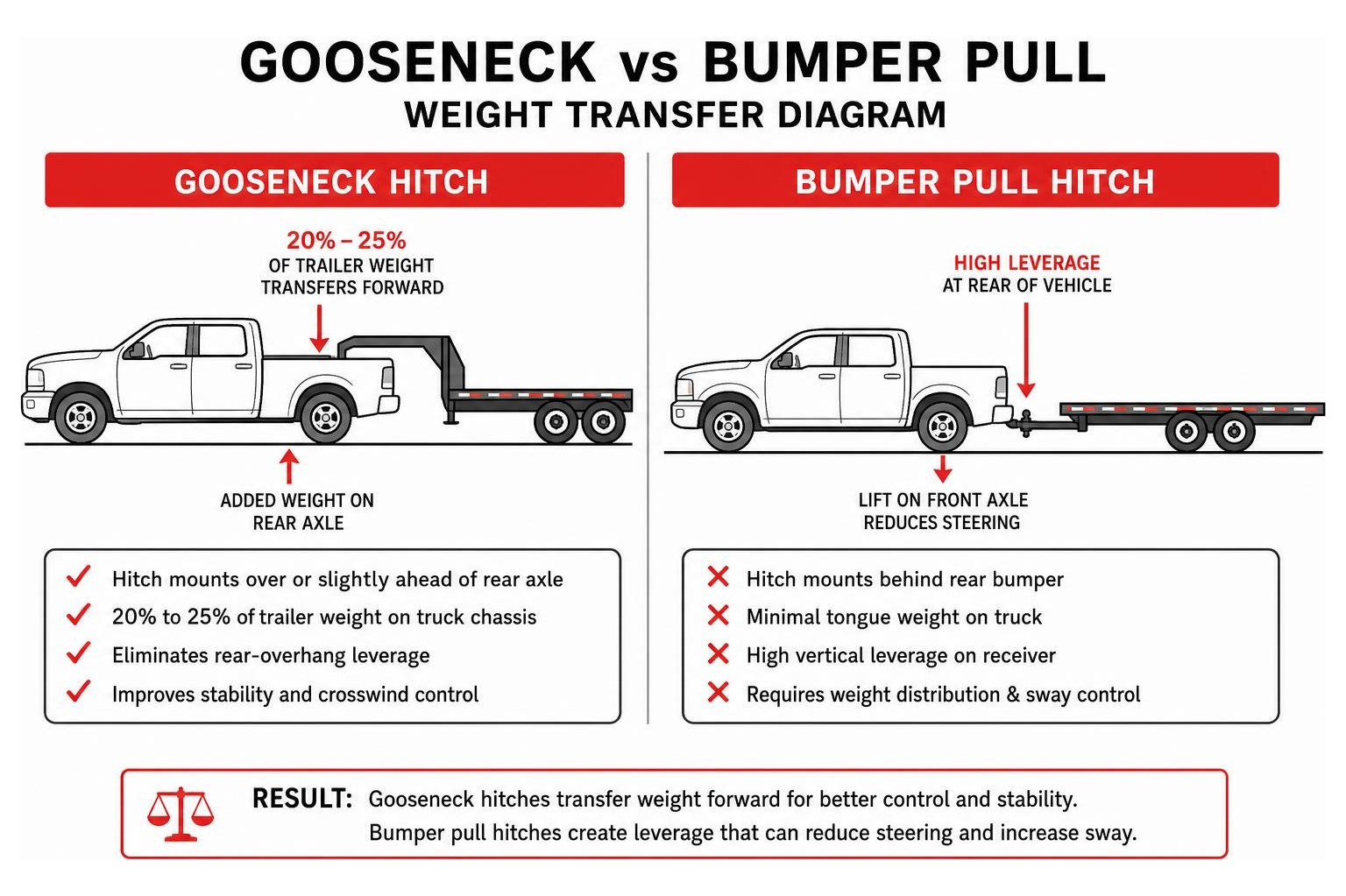
- Gooseneck Hitches: Mount directly over or slightly ahead of the tow vehicle’s rear axle inside the pickup bed. This puts 20% to 25% of the total trailer weight directly onto the truck’s chassis, eliminating rear-overhang leverage and dramatically improving stability during crosswinds.
- Bumper Pull Hitches: Fasten to a Class IV or Class V receiver behind the rear bumper, using 2-5/16-inch forged balls. A bumper pull configuration exerts high vertical leverage on the receiver, requiring a heavy-duty weight distribution hitch with integrated sway control brackets to level the tow vehicle’s steering axle.
Tongue Weight, Braking, and Payload Limits
Correct balance dictates that a bumper pull setup carries 10% to 15% of its total loaded weight on the ball, while a gooseneck requires 20% to 25% pin weight. A 14,000 lb enclosed bumper-pull trailer requires roughly 1,400 to 1,750 lbs of vertical tongue capacity—demanding a three-quarter-ton (2500 series) or one-ton (3500 series) truck.
For stopping heavy loads safely, electric brakes or electric-over-hydraulic (EOH) disc brakes are essential, paired with an in-cab controller, heavy-duty 7-way electrical connections, and an active breakaway battery system. Maintaining brake pads, drums, hub bearings, and suspension bushings is critical for highway reliability; keeping your setup field-ready starts with high-quality components and Big Tex trailer parts and maintenance essentials.
Loading Efficiency: Vehicles, Equipment, and Pallet Capacity
Managing deck space on a 32-foot deck requires strategic load distribution to keep axle weights legal while safeguarding equipment against transit vibrations.

Standard commercial sizing allows a 32-foot platform to fit:
- 14 to 16 standard 48×40-inch wooden pallets pinned in a single floor layer.
- Two compact or mid-size automobiles (or one full-size crew-cab pickup / drag car with pit tools).
- Multiple medium agricultural implements, tractors, or skid-steer pairings.
Managing Space in a 32 Foot Trailer for Multi-Car and Heavy Hauling
For car haulers transporting sports cars or lowered vehicles, internal deck geometry is paramount. Trailers equipped with a rear beavertail (a downward slope on the final 4 to 5 feet of flooring) reduce the break-over angle, preventing front splitters and exhaust systems from scraping during loading. Floor-mounted continuous E-track rails and heavy-duty swivel D-rings provide flexible anchor points for over-the-tire basket straps, preventing shock transfer into vehicle suspensions.
Hydraulic Dovetails and Tie-Down Systems
Loading heavy construction machinery onto standard beavertails often involves wrestling manual spring-assisted ramps. Premium configurations utilize an integrated 10-to-12-foot hydraulic dovetail featuring raised steel traction cleats. Operated by a single hydraulic control switch, the entire rear deck lowers to the ground, allowing quick loading of tractors, pavers, and zero-turn mowers in under two minutes. Integrated rub rails, stake pockets, and frame-mounted winch plates further streamline load securement.
Maneuverability, Campsite Length Limits, and Tight Sites
Operating a 32-foot trailer requires adjusting your driving approach for turns, tracking, and parking constraints. With an overall combination length often reaching 50 to 55 feet from the truck’s front bumper to the trailer’s rear bumper, managing off-tracking is a primary driving skill.
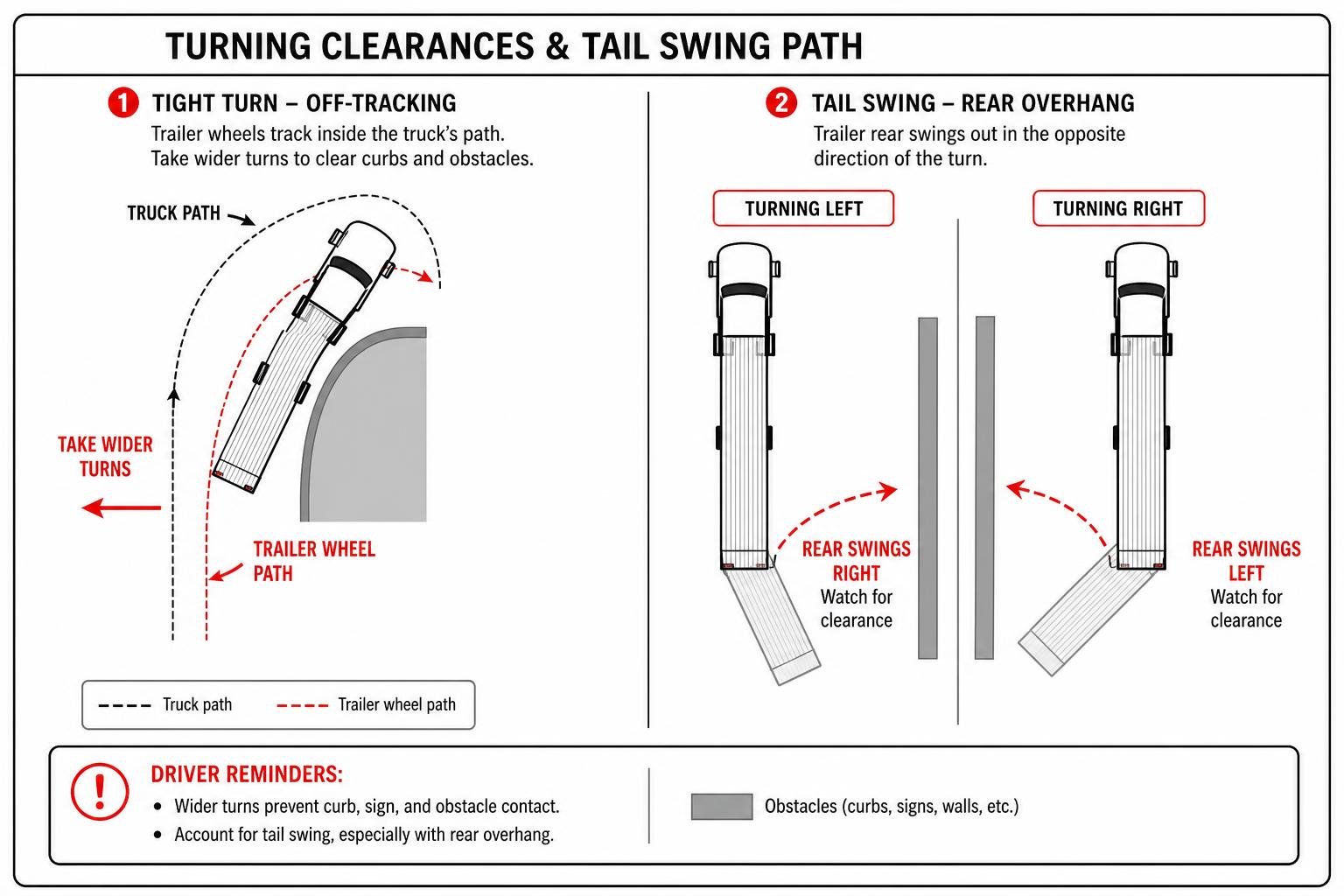
Navigating Turning Radii and Approach Clearances
Because the trailer’s pivot point sits well behind the tow vehicle, the trailer tires track significantly inside the truck’s path during tight turns. Drivers must execute wider turns at municipal intersections to keep trailer wheels clear of curbs, signs, and drainage culverts.
Rear tail swing is an equally vital factor: on models with extended rear overhangs past the rear axle, swinging the truck sharply in one direction causes the trailer’s rear corners to swing out several feet in the opposite direction.
Site Selection and Long-Term Placement
When bringing a trailer to a campground, staging yard, or residential site, consider spatial and physical limits:
- Campground Limits: State parks and private RV resorts frequently enforce maximum pad lengths between 25 and 30 feet. Booking a 32-foot unit without checking clearances can result in unlevel setups or road overhang.
- Storage Site Stability: Long-term staging on unimproved soil or grass causes heavy dual jacks to sink. Always drop landing gear shoes onto solid wood blocking or concrete pads.
- Jobsite Access: A 32-foot trailer offers superior accessibility on tight commercial properties compared to full-size 48-foot or 53-foot highway trailers, while still providing robust storage volume without requiring semi-tractor yard jockeys.
Frequently Asked Questions About 32 Foot Trailers
Can a 3/4-ton truck tow a 32-foot trailer?
A properly optioned 3/4-ton (2500/F-250) truck can handle a 32-foot bumper-pull enclosed trailer (up to roughly 14,000 lbs GVWR) when equipped with a weight-distribution hitch. However, for a 32-foot gooseneck flatbed trailer carrying heavy machinery with a GVWR of 24,000 lbs or more, a one-ton (3500/F-350) or dual-rear-wheel (DRW) truck is required to support the 4,800+ lb pin weight and total GCWR.
How many cars fit inside a 32-foot enclosed trailer?
A 32-foot enclosed trailer can fit two small-to-midsize passenger vehicles or race cars, provided their combined overall bumper-to-bumper lengths do not exceed 31 feet. Always verify that the combined vehicle weights do not surpass the trailer’s net payload rating.
What is the difference between a 32-foot cargo trailer and a storage trailer?
An enclosed cargo trailer sits low to the ground on drop axles with a rear ramp door, making it easily towable behind commercial pickups. A 32-foot storage trailer is a commercial dry van built to sit at loading dock height (48–52 inches off the ground) on heavy commercial running gear, designed primarily for static storage or loading-dock freight operations.
Conclusion
Choosing the right 32-foot platform requires balancing axle capacity, loaded weight, hitch engineering, and site accessibility. Taking the time to calculate real-world tongue weights, evaluate brake system designs, and measure your storage or campsite footprints ensures your trailering experience remains safe and reliable on every haul.
Whether you need a heavy-duty commercial flatbed to move skid steers or a versatile utility platform for regional jobs, our team at Elliott’s Auto & Equipment provides in-house guidance, factory-backed maintenance, and flexible financing. Stop by our South Boston, Virginia location or browse our full selection of heavy-duty commercial and utility trailers to match your hauling needs.