Keep Your Lawn Equipment Ready for Every Season
For reliable South Boston lawn equipment maintenance, service your mower, trimmer, tractor, or zero-turn before the busy season and again before long-term storage. Start with the basics:
- Check and change engine oil as the owner’s manual recommends.
- Clean or replace the air filter and inspect the spark plug.
- Sharpen and balance mower blades, then clean grass buildup from the deck.
- Inspect belts, tires, batteries, fuel lines, and safety controls.
- Use fresh fuel during the season and stabilize fuel before storage.
These simple checks help prevent hard starts, rough running, uneven cuts, and avoidable downtime. South Boston’s wet springs, summer heat, falling leaves, and winter storage period can all be hard on small engines and outdoor equipment. Preventive care is usually easier and less costly than waiting for a mower, trimmer, or tractor to quit in the middle of a job.
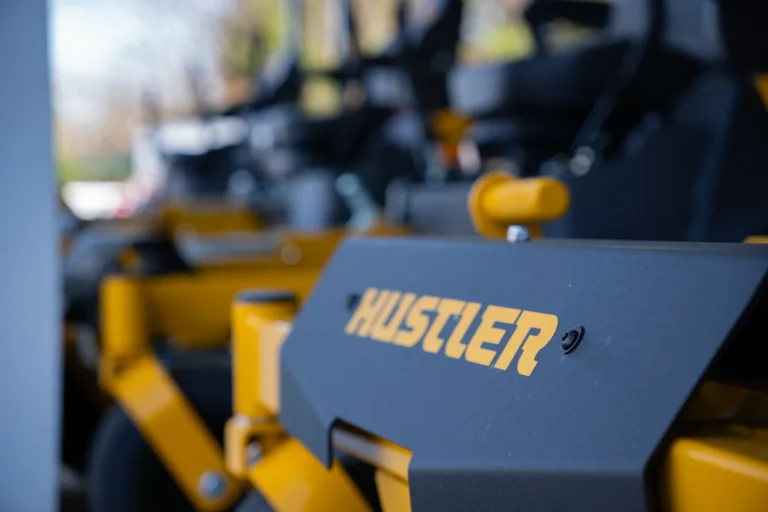
At Elliott’s Auto & Equipment, we are a South Boston, Virginia business built on years of local vehicle and equipment service experience. We support rural property owners with practical South Boston lawn equipment maintenance guidance, repair support, and new Hustler zero-turn lawn mowers for residential and commercial work. For broader context on how small engines work, the small engine overview explains the basic systems behind most outdoor power equipment.

Simple guide to South Boston lawn equipment maintenance terms:
- Hustler zero turn blade sharpening
- closest lawn mower repair shop
- closest lawn mower repair shop to me
Essential South Boston Lawn Equipment Maintenance Practices
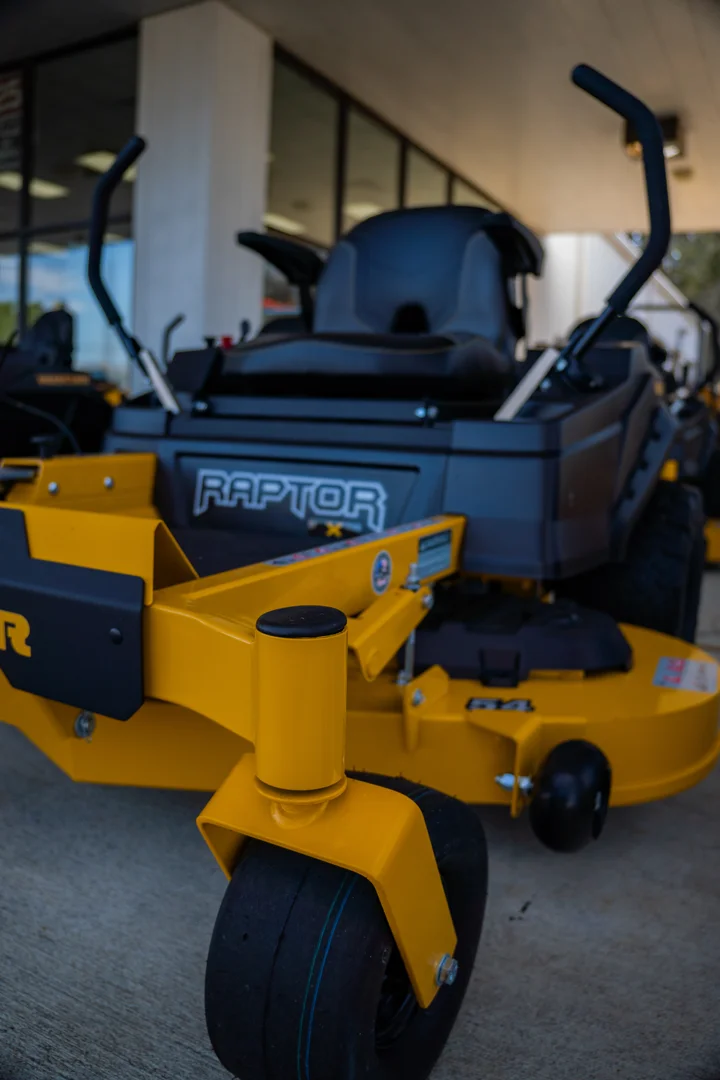
Taking care of small engines and cutting machinery requires consistency. When equipment sits through humid weather or runs under heavy summer heat across Southside Virginia, engine fluids break down, filters clog, and cutting edges dull rapidly. Following consistent South Boston lawn equipment maintenance steps preserves machine longevity, prevents mid-season breakdowns, and ensures a clean, manicured turf cut on every pass.
Engine Oil and Filter Replacements
Engine oil lubricates high-friction internal components, absorbs heat, and suspends contaminants. For standard four-stroke small engines, check oil levels before every startup. Change the engine oil and install a fresh oil filter every 50 to 100 operating hours, or at least once per season. Always warm up the engine slightly before draining to ensure settled debris flushes out with the old oil. Refill with the manufacturer-recommended viscosity, taking care not to overfill, which can cause seal failure or oil burning.
Air Filter and Spark Plug Care
A dirty air filter chokes the engine, resulting in poor fuel economy, reduced horsepower, and carbon buildup in the combustion chamber. Inspect paper and foam pre-filters every 25 hours. Tap out loose dust or replace saturated paper elements immediately. Foam filters should be cleaned with warm soapy water, thoroughly dried, and lightly oiled if specified by the manufacturer.
Replace spark plugs annually. Remove the plug to inspect the electrode:
- Light tan or gray color: Normal combustion.
- Heavy black soot: Overly rich fuel mixture or clogged air filter.
- Wet with fuel: Flooding or ignition failure.
- Blistered white insulator: Engine running lean or overheating.
Always set the spark plug gap with a feeler gauge to exact factory specifications before threading it into the cylinder head by hand to prevent cross-threading.
Blade Sharpening and Balancing
Dull mower blades tear grass blades rather than slicing them cleanly. Torn grass tips turn brown, lose moisture rapidly, and become vulnerable to fungal infections. For clean cuts and healthy turf, sharpen cutting edges every 20 to 25 operating hours using our Hustler zero turn blade sharpening guide. Always balance blades on a cone balancer after grinding; unbalanced blades cause severe spindle vibration that ruins bearings and deck welds.
Fuel System Management
Modern ethanol-blended gasoline degrades in as little as 30 days. As ethanol absorbs ambient moisture, it separates from fuel (phase separation) and deposits gummy varnish inside carburetors and fuel injectors. Use fresh, stabilized 87-octane or higher fuel treated with a quality fuel stabilizer. Inspect rubber fuel lines for weather cracking, dry rot, or hardening, and swap out the inline fuel filter every season to protect precision engine jets.
Key Steps for South Boston Lawn Equipment Maintenance on Mowers and Trimmers
Trimmers, blowers, walk-behind mowers, and zero-turns share fundamental mechanical systems that require periodic adjustments.
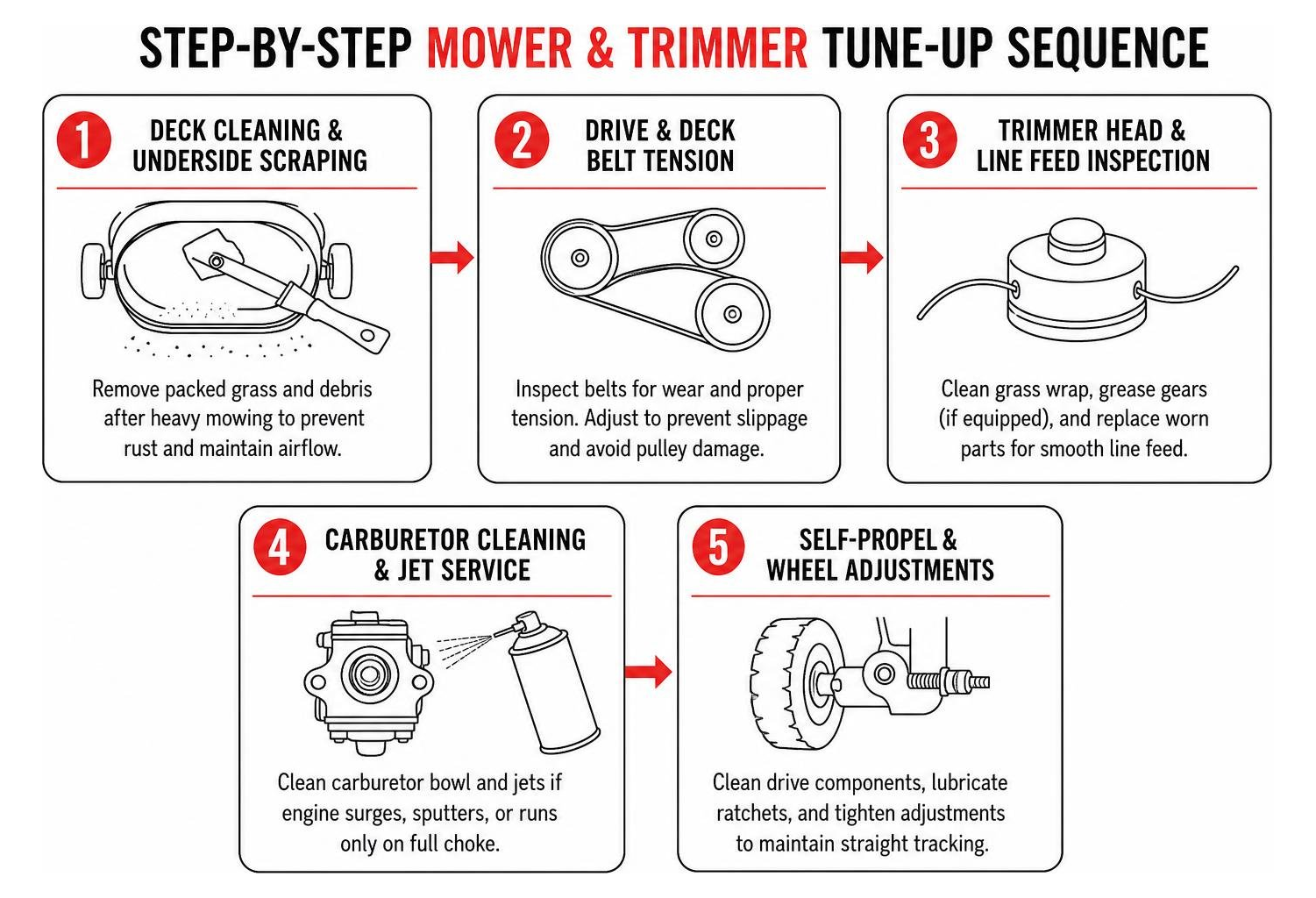
- Deck Cleaning and Underside Scraping: Packed grass clippings underneath the cutting deck restrict airflow, reduce vacuum lift, and trap moisture against steel decks, causing rapid rust formation. Disconnect the spark plug wire, lift the machine safely, and scrape away hardened buildup after every heavy mowing session.
- Drive and Deck Belt Tension: Inspect rubber V-belts for glazing, sidewall cracks, frayed cords, and proper tension. Loose belts slip under heavy load, leaving patches of uncut grass, while overly tight belts place unnecessary side loads on pulley bearings.
- Trimmer Head and Line Feed Inspection: String trimmers work in thick brush, dirt, and fence lines. Clean grass wrap from the trimmer head gearbox, grease the bevel gear assembly if equipped, and replace worn eyelets or cracked bump knobs to ensure smooth line advancement.
- Carburetor Cleaning and Jet Service: If an engine surges, sputters under load, or runs only on full choke, clean the carburetor bowl and pilot jet using aerosol carburetor cleaner and compressed air.
- Self-Propel and Wheel Adjustments: On walk-behind mowers, clean dirt out of drive gears, lubricate drive ratchets, and tighten wheel adjuster hardware to keep tracking straight and prevent wheel wobble.
Advanced South Boston Lawn Equipment Maintenance for Tractors and Zero-Turns
Larger commercial zero-turn mowers and property maintenance tractors demand rigorous hydraulic and chassis care.
- Hydrostatic Transmission Fluid and Filters: Zero-turn mowers rely on dual hydrostatic pumps and wheel motors. Replace hydro fluid and screw-on hydraulic filters at intervals specified by the manufacturer (often at initial 50-hour break-in, then every 200–400 hours). Hydrostatic systems require clean, air-free synthetic oil to avoid sluggish steering and pump cavitation.
- Spindle and Pivot Greasing: Locate all grease zerks on deck spindles, caster wheel yokes, front axle pivots, and deck lift linkages. Pump high-temperature, lithium-complex marine or EP grease into bearings until clean grease purges through the seals. Greasing pushes out dirt and water picked up during mowing.
- Battery Testing and Terminal Cleaning: Tractor and mower batteries endure extreme vibration. Use a digital multimeter to check resting voltage (12.6V is fully charged). Clean corrosion from lead posts with a wire brush and a baking soda slurry, torque terminal bolts securely, and coat them with dielectric grease.
- Chassis and Steering Calibration: Check tracking on zero-turn levers. If the machine pulls to the left or right at full forward travel, adjust the mechanical stops or steering dampeners so both wheel motors track evenly.
- Pre-Season System Checks: Review our detailed spring maintenance checklist before putting equipment into full production each year.
Seasonal Lawn Care Equipment Schedules in South Boston
South Boston experiences a humid subtropical climate with hot, humid summers, crisp autumns, and cold winter stretches. Aligning your maintenance routine with the calendar ensures machines run smoothly during peak growing periods and wake up without trouble in the spring.
| Maintenance Task | Spring Kickoff (March–April) | Summer Mid-Season (June–August) | Fall Clean-Up (Sept–November) | Winter Storage (Dec–February) |
|---|---|---|---|---|
| Engine Oil & Filter | Change fresh before first run | Inspect level every 8–10 hours | Top off; change if high hours | Fresh oil change before storage |
| Blades & Cutting Edges | Sharpen, balance, and install | Sharpen every 20–25 hours | Inspect after leaf mulching | Remove, sharpen, oil for storage |
| Air & Fuel Filters | Replace with new OEM filters | Inspect and blow out pre-cleaner | Clean dust from leaf collection | Drain or change final filter |
| Fuel System Care | Fill tank with fresh stabilized fuel | Keep fuel can fresh (under 30 days) | Add stabilizer to bulk tanks | Run dry or fog carburetor |
| Deck & Chassis | Level deck; grease all fittings | Scrape deck buildup weekly | Clear compacted leaf matter | Power wash, dry, and spray anti-rust |
| Battery & Electrical | Clean posts; test cold cranking | Check charging output | Check terminal connections | Remove and place on smart tender |
| Tires & Hydraulics | Set PSI; check hydro levels | Monitor hydro operating temps | Check hydro fluid cleanliness | Inspect tires for dry rot |
Spring and Summer Operational Checklist
Early spring is the time to wake equipment up. Complete your comprehensive spring yard prep checklist to eliminate costly downtime during the rapid April green-up.
- Verify Engine RPM: Check high-idle and low-idle engine speeds using a digital optical tachometer. Small engines must operate at specified RPM (typically 3,600 RPM under load) to produce rated horsepower, cool the block, and turn mower blades fast enough for clean discharge.
- Level the Cutting Deck: Park on a flat, level concrete pad. Check tire pressures first, as unequal tire pressure unlevels the deck instantly. Measure blade tip heights side-to-side (within 1/8 inch) and adjust front-to-back rake so the front blade tips sit 1/8 to 1/4 inch lower than the rear tips.
- Set Proper Tire Pressure: Overinflated tires cause a harsh ride and scalping; underinflated tires drag on fuel economy and tear turf during zero-turn pivots. Most zero-turn drive tires require 10–14 PSI, while front smooth casters use 12–15 PSI.
- Mid-Season Cooling Fin Clearing: During dry summer mowing, chaff, grass seeds, and weed thistle collect inside the engine blower housing and cooling fins. Remove the engine shroud periodically and clear packed debris to prevent severe cylinder head warping and valve overheating.
Fall and Winter Equipment Storage
Proper seasonal layover is essential for outdoor power equipment. If you manage larger land machinery alongside your mowing equipment, read our guide on winterizing your farm equipment for heavy-duty storage practices.
- Fuel System Evacuation or Full Stabilization: Either treat fuel with premium stabilizer, run the engine for 10 minutes to circulate it through the carburetor, and fill the tank completely to prevent tank condensation—OR drain the tank entirely and run the engine until it dies from fuel starvation. Drain the carburetor float bowl screw to protect delicate brass jets.
- Fogging the Cylinders: Remove the spark plugs and spray a 5-second burst of fogging oil directly into each spark plug hole. Rotate the engine crankshaft by hand two full turns to distribute protective oil across the cylinder walls, piston rings, and valve faces, then reinstall the plugs loosely.
- Battery Preservation: Cold winter temperatures drain lead-acid batteries. Disconnect the negative terminal, remove the battery, clean the case, and store it on a wooden shelf indoors hooked up to an automatic trickle charger/tender.
- Under-Deck Rust Inhibitor: Thoroughly power-wash the deck underside to remove all acidic grass pulp. Allow the metal to dry completely in the sun, then coat the bare steel with fluid film, used motor oil, or rust-inhibiting paint to prevent winter corrosion.
Equipment Operation Safety and Local Noise Considerations
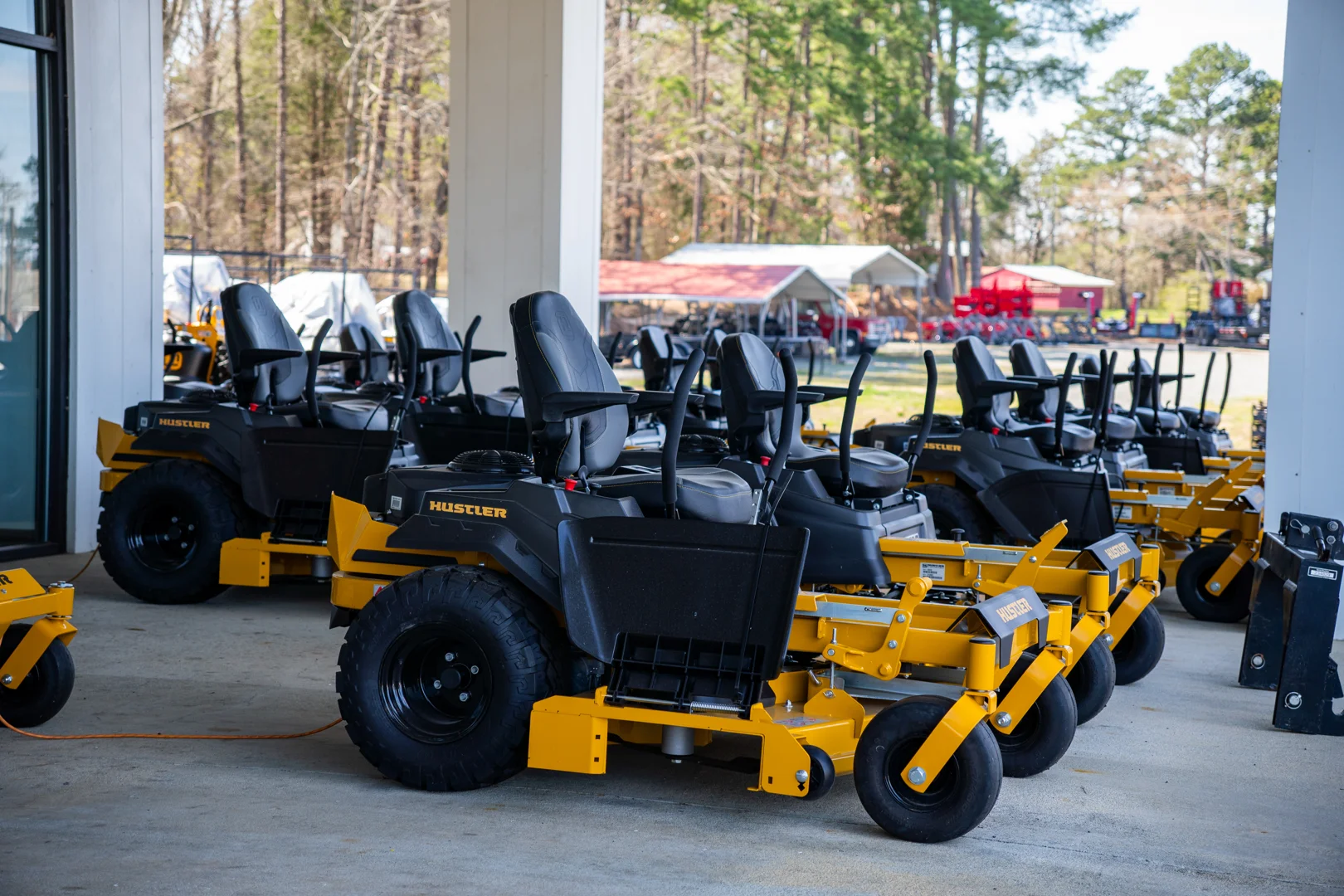
Operating commercial lawn equipment and estate tractors involves high-velocity rotating blades, heavy rotating inertia, and hot exhaust systems. Maintaining personal safety and respecting local community guidelines keeps property maintenance productive and safe.
Operator Safety Precautions
- Eye and Hearing Protection: Mower decks can eject rocks, sticks, and wire at speeds exceeding 200 MPH. Always wear ANSI-rated safety glasses. Operating power machinery with sound levels above 85 decibels causes irreversible hearing damage over time; use earplugs or sound-dampening earmuffs rated for small engine decibel ranges.
- Safety Interlock Testing: Never bypass or disable safety interlock switches. Test the operator presence control (seat switch), PTO shutoff switch, neutral safety switches, and parking brake interlocks before every season. If an engine fails to shut off when the operator leaves the seat with the blades engaged, repair the switch immediately.
- Rollover Protection Structures (ROPS): When operating on rolling hills or ditch banks, keep the ROPS structure locked in the upright position and fasten your seatbelt. If ROPS must be folded down to clear low-hanging trees, unbuckle the seatbelt so the operator is not pinned under the frame in an upset.
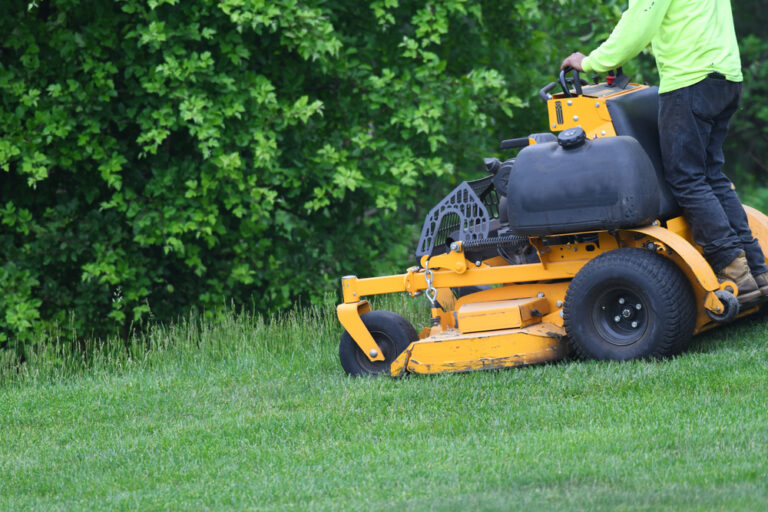
- Slope Operation Limits: Mow up and down moderate slopes with riding equipment rather than across them to prevent side rollovers. Zero-turn mowers lose steering traction when traveling down steep slopes; never operate on hillsides exceeding 15 degrees.
Respecting Noise and Operation Windows
South Boston and surrounding residential neighborhoods maintain reasonable noise standards to ensure peaceful communities.
- Operate gas-powered machinery between 7:30 AM and 7:00 PM on weekdays, and after 9:00 AM on weekends.
- Avoid early morning mowing in residential neighborhoods when grass is wet with morning dew, as wet grass clogs mower decks and clumps on lawns.
- Keep engine mufflers in sound condition; cracked exhaust headers or rusted-out mufflers increase noise levels drastically and pose a fire hazard around dry grass.
Frequently Asked Questions About Lawn Equipment Repair
How often should lawn mower blades be sharpened?
Mower blades should be sharpened and balanced every 20 to 25 operating hours under normal cutting conditions. If you mow sandy soil, scalped terrain, or areas with exposed tree roots and hidden rocks, check blades every 10 to 15 hours. A sharp blade cleanly cuts grass tissue, promoting fast turf recovery, lower fuel consumption, and reduced engine load. Replace blades when the sail (the curved back lifter) has worn thin or when grinding has removed more than 1/3 of the original cutting edge width.
What are the main signs that equipment needs professional service?
- Excessive Vibration: Unbalanced blades, bent crankshafts, damaged spindle bearings, or thrown pulley counterweights create severe chassis vibration.
- Engine Surging or Backfiring: Hunting idle (engine speeding up and slowing down rhythmically) indicates a lean fuel condition, vacuum leak, or clogged pilot jet.
- Uneven or Stepped Mowing Patterns: If the cut leaves ridges or uneven streaks despite level deck adjustments, spindle bearings may be loose, a deck belt may be slipping, or the engine may not be achieving full operating RPM.
- Hard Starting and High Cranking Resistance: Burned starter relays, corroded cables, broken compression releases, or severe carbon buildup require professional diagnostic tools.
Where can residents find dependable lawn equipment repair?
When DIY maintenance reaches its limits, work with a professional service center equipped with factory-trained technicians, advanced diagnostic testing tools, and genuine OEM parts. For full details on evaluating local service facilities, review our guide on finding a trusted lawn mower repair shop.
At Elliott’s Auto & Equipment, we service and repair outdoor power equipment, commercial mowers, and tractors across the region. We support equipment owners from surrounding communities with specialized care, including tractor and mower services for Danville, mower and tractor services in Roxboro, mower and tractor expertise for Martinsville, and mower and tractor solutions in Clarksville.
We also serve nearby regional property managers looking for mowers and tractors in Henderson, tractor and mower support in Chase City, mowers and tractors in Farmville, and mower options for Keysville.
Conclusion
A dependable lawn mower, trimmer, or tractor is the backbone of proper property maintenance. By following scheduled oil changes, maintaining clean air and fuel systems, regularly sharpening cutting blades, and properly winterizing your engine before the cold months, you will protect your equipment investment and keep your lawn looking sharp year-round.
When your equipment requires major service, hydraulic diagnostics, precision blade balancing, or seasonal tune-ups, trust our experienced team. As a dedicated local dealership, Elliott’s Auto & Equipment sells and services Mahindra tractors, Big Tex trailers, and new Hustler zero-turn lawn mowers for residential and commercial customers. If you are comparing equipment platforms, our staff can help explain how to choose the right tractor dealer and guide you to the best tractor options in South Boston. We are your trusted Mahindra tractor dealer in South Boston, providing complete in-house financing, parts, and maintenance support.
Learn more about the comprehensive support and service experience at Elliott’s or visit our main service department page to schedule your professional equipment maintenance today!